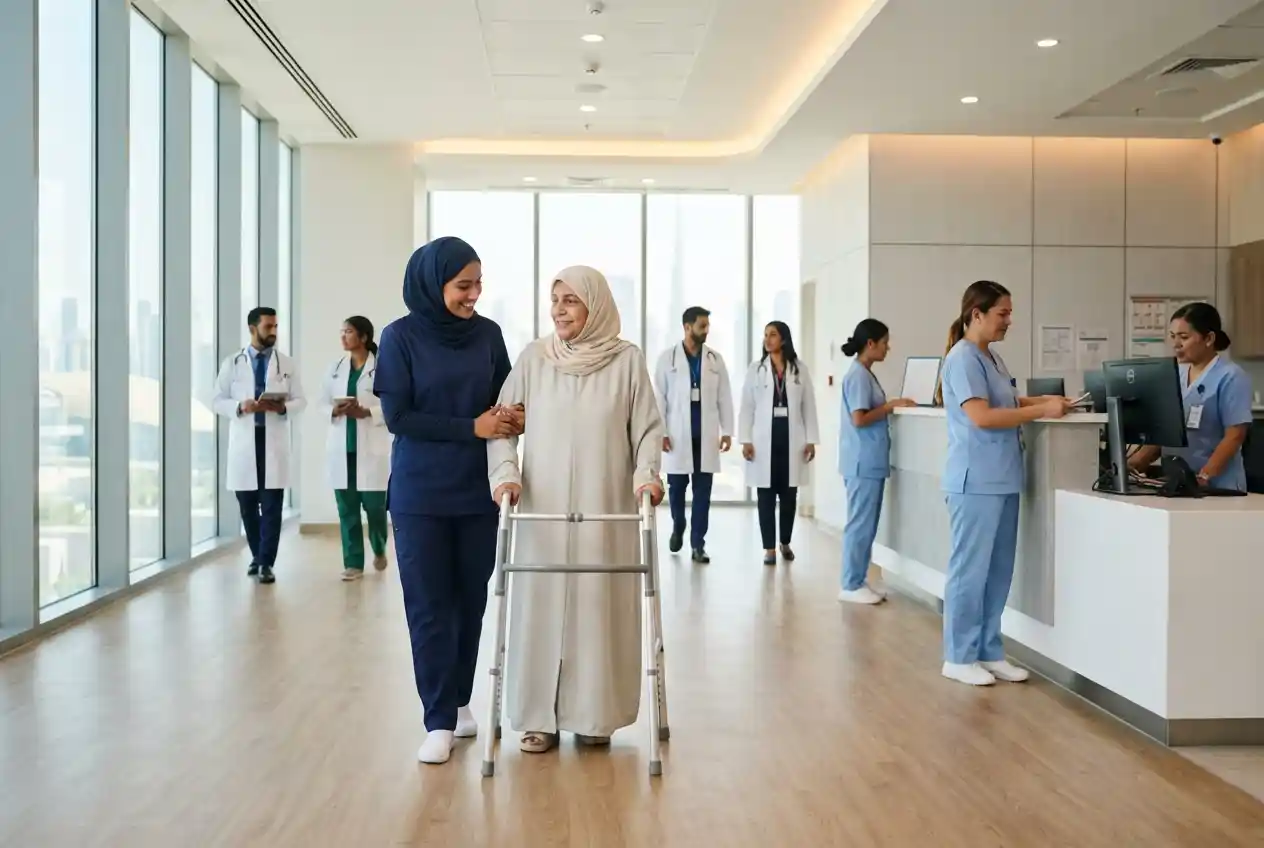










Home healthcare has become an important option for people in the UAE who need medical support without spending more time than necessary in a hospital or clinic. Instead of travelling to a healthcare facility for every appointment or treatment, patients can receive selected services in the comfort of their own homes. This can be particularly useful for older adults, people recovering from surgery, individuals managing long-term conditions, and patients who need nursing or rehabilitation support.
For families, home healthcare can also make ongoing care more manageable. A suitable provider may coordinate nurses, therapists, caregivers and other professionals according to the patient’s needs. However, not every provider offers the same services, and families should consider clinical requirements, professional qualifications, licensing, availability and the overall care plan before making a decision.
Dubai’s healthcare regulator, the Dubai Health Authority (DHA), maintains standards for home healthcare services and identifies home health care among its healthcare service categories. These standards are designed to support safe and appropriate care outside traditional healthcare facilities. DHA’s healthcare services information can be useful for understanding the wider regulatory and service environment in Dubai.
What Is Home Healthcare?
Home healthcare refers to healthcare services delivered at a patient’s residence rather than exclusively in a hospital, clinic or other healthcare facility. Depending on the patient’s condition and the provider’s scope of practice, services may include skilled nursing, rehabilitation, post-operative support, elderly care, wound management, medication assistance and other forms of clinical or supportive care.
The exact service package depends on the patient’s needs. Someone recovering after an operation may require temporary nursing visits and rehabilitation, while an older person with ongoing health needs may require a longer-term care arrangement. The important point is that home healthcare should be based on an appropriate assessment rather than simply choosing the provider with the broadest list of services.
What Services Can Home Healthcare Providers Offer?
Home healthcare providers in the UAE may offer different combinations of medical, nursing, rehabilitation and supportive services. Before making an appointment, families should confirm exactly what is included and whether the service is appropriate for the patient’s medical requirements.
Skilled Nursing Care
Home nursing is one of the most commonly associated services with home healthcare. Depending on the patient’s care plan, a qualified nurse may assist with clinical monitoring, prescribed treatments, wound care, medication-related support and recovery after a hospital stay.
Elderly Care
Older adults may benefit from home-based support when travelling to a healthcare facility is difficult or when they need assistance with ongoing care. Services can range from nursing support to assistance with daily routines, depending on the patient’s condition and the provider’s scope.
Post-Surgical Care
Recovery does not always end when a patient leaves the hospital. Some patients need follow-up care, wound monitoring, mobility assistance or rehabilitation at home. A structured home healthcare plan can help families manage these needs while following the instructions provided by the treating medical team.
Physical Rehabilitation
Physiotherapy and other rehabilitation services may be delivered at home when clinically appropriate. Home-based rehabilitation can be particularly practical for patients whose mobility makes regular travel challenging.
Chronic Condition Support
People living with long-term health conditions may require regular monitoring and assistance. Home healthcare can form part of a broader care plan, although the services required should always be determined according to the patient’s medical situation and professional advice.
Who Can Benefit From Home Healthcare?
Home healthcare is not limited to one age group or type of patient. Its suitability depends on the individual’s medical and practical circumstances. It may be considered for older adults, patients recovering after procedures, people with mobility limitations, individuals requiring rehabilitation and families managing longer-term care needs.
For some patients, receiving appropriate support at home can make the care experience less disruptive. Familiar surroundings may also make it easier for families to participate in day-to-day care, although home treatment should never replace hospital or emergency care when a patient needs a higher level of medical intervention.
Benefits of Home Healthcare in the UAE
One of the biggest advantages of home healthcare is convenience. Patients can receive selected services without travelling to a clinic for every scheduled visit. This can be especially valuable for people with limited mobility or those who require regular assistance.
Another benefit is continuity. When a care plan is properly coordinated, healthcare professionals can understand the patient’s needs over time and communicate relevant observations to the family and wider healthcare team.
Home healthcare may also provide practical support for family members. Caring for an older relative or recovering patient can involve significant time and organisation. Professional assistance can help families manage appropriate aspects of care while maintaining the patient’s dignity and routine.
How to Choose a Home Healthcare Provider in the UAE
Choosing a provider should involve more than comparing prices. Healthcare is highly personal, and the right provider depends on the patient’s clinical requirements, the professionals involved and the quality of communication.
Check Licensing and Professional Credentials
Start by confirming that the provider and relevant healthcare professionals are appropriately licensed for the services they provide. Families should be particularly careful when arranging clinical services such as nursing, rehabilitation or medical treatment.
Match Services to the Patient’s Needs
Ask the provider to explain exactly which services are available and whether they can support the patient’s specific requirements. A provider experienced in elderly care may have a different service model from one focused primarily on post-operative nursing or rehabilitation.
Ask About the Care Team
Find out who will provide the service, what their professional qualifications are and how the provider manages substitutions when the regular caregiver or nurse is unavailable. Consistency can be particularly important for patients receiving ongoing care.
Understand the Care Schedule
Clarify whether visits are scheduled hourly, daily, overnight or according to another arrangement. Families should also ask about emergency contact procedures and what happens if the patient’s condition changes.
Review Costs and Inclusions
Prices can vary according to the type and duration of care. Before starting a service, ask for a clear explanation of what is included, whether assessments are charged separately, and whether additional visits or specialised services carry extra costs.
Home Healthcare Providers in Dubai
Dubai has a broad healthcare ecosystem that includes hospitals, clinics, specialised providers and home-based services. Families researching local options may encounter providers such as Life Home Healthcare, Arabian Home Healthcare, Bayti Home Healthcare LLC, Nurseco Home Healthcare LLC, Healthserve Home Healthcare and Salwaty Home Healthcare LLC.
These names should not automatically be treated as interchangeable. Each provider may have different areas of expertise, staffing arrangements, service coverage and pricing. Patients and families should independently verify current licensing, available services and suitability before making a healthcare decision.
Searches for terms such as arabian home healthcare dubai, bayti home healthcare llc or nurseco home healthcare may help users identify providers, but search visibility alone should not be considered a measure of clinical quality.
Questions to Ask Before Starting Home Healthcare
A short consultation can help families identify whether a provider is suitable. Useful questions include:
- Which home healthcare services are available?
- Are the healthcare professionals appropriately licensed?
- Can the provider support the patient’s specific medical needs?
- How is the patient’s care plan developed and reviewed?
- What happens if the assigned nurse or caregiver is unavailable?
- How can the family contact the provider outside scheduled visits?
- What are the charges and what services are included?
- Does the provider coordinate with the patient’s doctor or hospital when required?
Home Healthcare and the Wider UAE Healthcare Sector
Home healthcare is one part of a much broader healthcare ecosystem. Patients may move between hospitals, outpatient clinics, rehabilitation services, pharmacies and home-based care depending on their circumstances. Understanding the wider range of healthcare services in the UAE can help families see where home-based care fits into an overall treatment journey.
For healthcare professionals and organisations, home healthcare also connects with wider areas such as healthcare management, healthcare consulting and healthcare solutions. These subjects are becoming increasingly relevant as healthcare organisations look for ways to coordinate services, improve patient experiences and manage care beyond traditional facilities.
When Home Healthcare May Not Be Enough
Home healthcare can be valuable, but it is not appropriate for every medical situation. Patients experiencing severe or rapidly changing symptoms may require urgent assessment at a hospital or emergency facility. Families should follow the instructions of the patient’s healthcare team and seek emergency medical assistance when necessary.
Similarly, home healthcare should not be viewed as a replacement for specialist diagnosis or hospital treatment when those services are required. Instead, it can complement the broader healthcare plan when the patient’s condition and professional assessment make home-based care appropriate.
Final Overview
Home healthcare can provide a practical way for eligible patients to receive selected medical, nursing and rehabilitation services in a familiar environment. For families in the UAE, the most important step is to choose a provider based on clinical suitability, professional credentials, service quality, communication and transparent costs rather than convenience alone.
As the UAE healthcare sector continues to develop, home-based care is likely to remain an important part of the wider healthcare landscape. Whether a family is researching elderly support, post-operative care, nursing services or rehabilitation, careful provider selection can make the home healthcare experience safer, clearer and more manageable.