









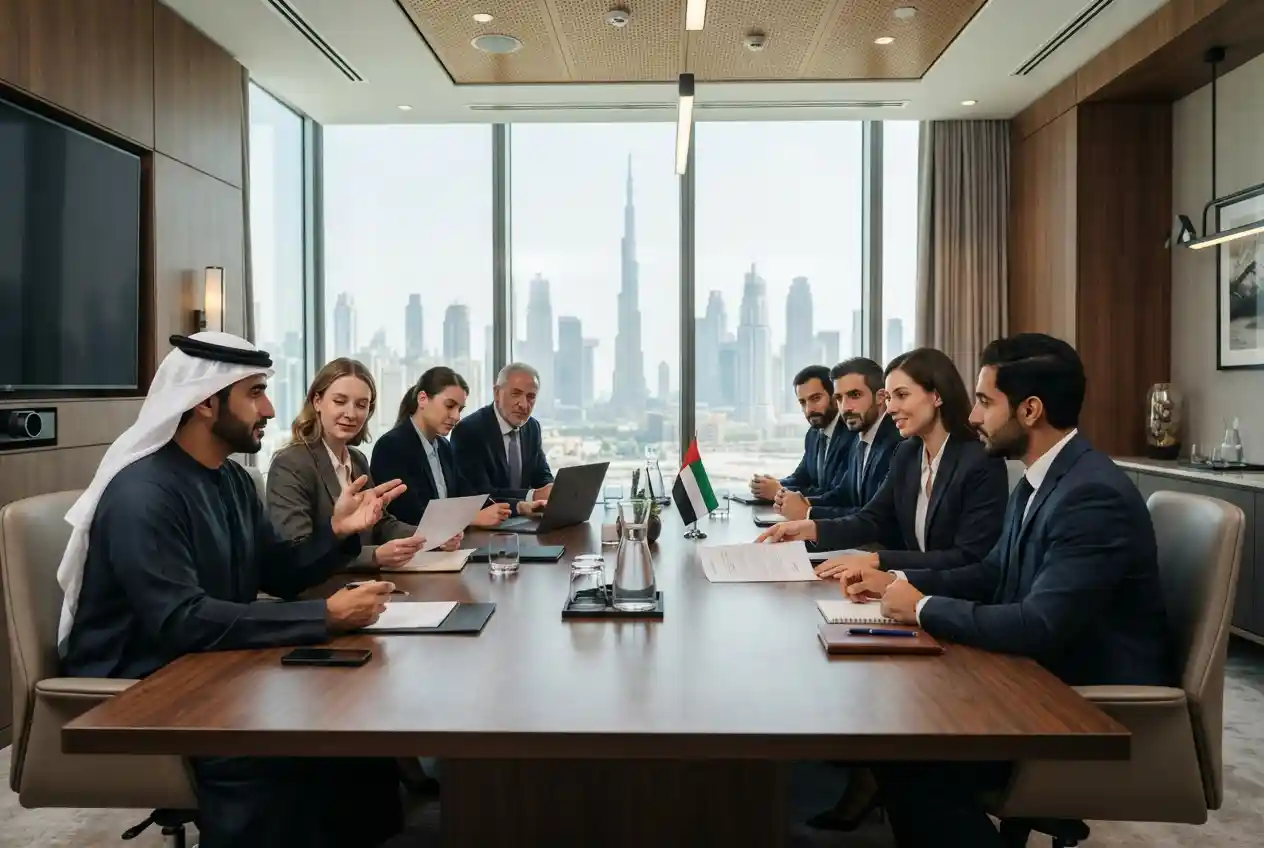
Business negotiation is a central part of commercial activity in the UAE. Whether a company is discussing supplier pricing, negotiating a partnership, hiring a service provider, or finalising a major commercial agreement, the quality of the negotiation can directly influence costs, relationships, responsibilities and long-term business outcomes.
In a competitive market such as the UAE, effective negotiation involves more than trying to secure the lowest possible price. Businesses need to understand the interests of the other party, establish clear objectives, evaluate risks and turn verbal discussions into practical contractual terms. Strong negotiation skills can help business owners and professionals reach agreements that are commercially useful while preserving valuable relationships.
This is particularly important when negotiations move from general discussions to formal commitments. At that stage, contract negotiation requires careful attention to pricing, payment terms, performance obligations, termination provisions, liability and dispute resolution. A well-managed negotiation process can therefore become an important part of broader contract management and business risk management.
What Is Business Negotiation?
Business negotiation is the structured process through which two or more parties discuss commercial terms and attempt to reach an agreement that satisfies their key interests. The parties may negotiate price, services, delivery schedules, responsibilities, payment arrangements, exclusivity, warranties, deadlines or other conditions.
Negotiation can take place between companies, customers and suppliers, business partners, employers and employees, investors and entrepreneurs, or other commercial parties. Some negotiations may be completed in a single meeting, while complex transactions can involve weeks or months of discussions.
The objective is not necessarily for one side to win at the expense of the other. Sustainable business relationships often depend on finding terms that provide sufficient value and protection for everyone involved.
Why Business Negotiation Matters for UAE Companies
The UAE has a highly active commercial environment involving local companies, multinational organisations, investors, entrepreneurs and service providers. Businesses frequently negotiate across different industries, company sizes and cultural backgrounds.
Effective negotiation can help companies control expenditure, improve supplier relationships, establish clearer responsibilities and avoid misunderstandings. It can also provide an opportunity to identify commercial risks before they become contractual or operational problems.
For example, a company negotiating with a technology supplier should consider more than the initial subscription price. Data responsibilities, implementation support, renewal conditions, service levels and termination rights may have a greater financial impact over the life of the relationship.
Businesses should also consider how a proposed deal fits into their wider legal and operational framework. Understanding contract management, for example, can help teams think beyond signing and consider how agreed obligations will be monitored throughout the relationship.
Essential Negotiation Skills for Business Professionals
1. Active Listening
Strong negotiators do not simply wait for their opportunity to speak. They listen carefully to understand the other party’s priorities, concerns and limitations. Asking relevant questions can reveal what the other side values most and where there may be room for compromise.
2. Clear Communication
Commercial discussions should be precise and easy to understand. Ambiguous statements can create different interpretations and later disagreements. Professionals should clearly explain what they are offering, what they expect in return and which terms are essential.
3. Preparation
Preparation is one of the most important negotiation skills. Before entering a meeting, businesses should understand their objectives, preferred outcome, acceptable alternatives and key risks. They should also research the other party, review relevant documents and identify the terms that are genuinely negotiable.
4. Problem-Solving
Negotiations do not always progress smoothly. When the parties disagree, effective negotiators look for alternative solutions instead of focusing only on the original proposal. A different payment structure, delivery schedule or scope of work may create value for both sides.
5. Emotional Control
Commercial negotiations can become difficult when large amounts of money, deadlines or strategic relationships are involved. Remaining professional under pressure makes it easier to assess proposals objectively and avoid making decisions based purely on emotion.
How to Prepare for a Business Negotiation
Preparation should begin before the first formal negotiation meeting. The business should establish exactly what it wants to achieve and distinguish essential terms from preferences.
A practical preparation process can include:
- Defining the main commercial objective.
- Identifying the minimum acceptable outcome.
- Establishing realistic alternatives if an agreement cannot be reached.
- Researching the other party and its commercial position.
- Reviewing pricing, costs and expected value.
- Identifying legal, financial and operational risks.
- Preparing questions and supporting documentation.
- Deciding which terms can be traded during the negotiation.
It is also useful to identify potential points of disagreement before the meeting. This allows the negotiation team to prepare responses rather than making rushed decisions during discussions.
Contract Negotiation: Turning Discussions Into Clear Terms
Contract negotiation is where business discussions become particularly important because the final agreement may establish legally significant rights and obligations. A commercially attractive deal can still create problems if its contractual language is unclear or if important responsibilities have not been addressed.
Common areas that may require attention include:
- Scope of products or services.
- Pricing and payment schedules.
- Delivery or performance deadlines.
- Quality standards and service levels.
- Confidentiality obligations.
- Intellectual property ownership and usage rights.
- Warranties and representations.
- Liability and indemnification.
- Contract duration and renewal.
- Termination rights.
- Dispute resolution arrangements.
Each provision should be considered in relation to the actual commercial relationship. A business should avoid accepting standard wording without understanding how it applies to the transaction.
Where a negotiation involves significant financial, regulatory or legal exposure, obtaining professional advice before signing can help identify issues that a commercial team may overlook.
Negotiating Price Without Damaging the Business Relationship
Price is often one of the most visible negotiation points, but focusing exclusively on price can produce a weaker commercial outcome. A lower price may come with reduced service levels, longer delivery times, limited support or less favourable payment conditions.
Instead of simply asking for a discount, businesses can explore the complete value proposition. For example, a longer commitment may justify better pricing, while faster payment could potentially support more favourable commercial terms.
This approach can make negotiations more constructive because both parties are considering the overall value of the arrangement rather than treating every discussion as a simple price dispute.
Cultural Awareness in UAE Business Negotiations
Businesses operating in the UAE often work with professionals and organisations from many different cultural and commercial backgrounds. Effective communication therefore requires patience, professionalism and cultural awareness.
Building trust can be particularly valuable in relationship-driven commercial discussions. Businesses should avoid unnecessarily aggressive tactics when a collaborative approach is more likely to produce a sustainable relationship.
At the same time, professionalism should not mean avoiding difficult questions. Important commercial terms should still be discussed clearly, documented properly and reviewed before commitments are made.
Common Business Negotiation Mistakes
Even experienced professionals can make mistakes during negotiations. One common problem is entering a discussion without clearly defined objectives. Without a target and a minimum acceptable position, it becomes difficult to know whether a proposed deal is actually beneficial.
Another mistake is making concessions too quickly. Concessions should generally have a commercial reason and should not undermine the company’s ability to deliver or remain profitable.
Businesses should also avoid relying entirely on verbal promises. If an important point affects the commercial relationship, it should be reflected accurately in the relevant documentation.
Finally, rushing to sign because of a deadline can create avoidable risk. Important agreements deserve enough time for commercial, operational and legal review.
Business Negotiation and Wider Risk Management
Negotiation is closely connected to business risk. Every major agreement can introduce financial, operational, legal or reputational exposure. Identifying these issues during negotiation gives a company a chance to address them before they become problems.
For a broader understanding of how organisations can identify and manage these exposures, businesses can also explore business risk management. This helps connect individual contractual decisions with the company’s wider approach to enterprise risk and operational risk.
Similarly, organisations that operate in regulated sectors should consider whether proposed commercial arrangements create compliance obligations. Negotiation should not unintentionally produce commitments that conflict with applicable regulatory requirements or internal policies.
How to Improve Business Negotiation Results
Improving negotiation performance is an ongoing process. Businesses can review completed negotiations to identify which strategies produced positive results and which created unnecessary friction.
Teams can also develop internal negotiation guidelines covering approval limits, pricing authority, contract review procedures and escalation requirements. Training employees in communication, preparation and commercial analysis can further improve consistency.
Another useful practice is separating the negotiation into issues rather than treating the agreement as one large decision. When several terms are under discussion, understanding the relative importance of each issue can create opportunities for mutually beneficial trade-offs.
Companies should also maintain accurate records of agreed changes. Once negotiations are complete, the final contract should accurately reflect the commercial terms that both parties accepted.
When Professional Support May Be Appropriate
Routine commercial discussions may be handled internally, but complex transactions can justify specialist support. This can be particularly relevant when an agreement involves significant financial commitments, intellectual property, multiple jurisdictions, unusual liability provisions or complex regulatory requirements.
Professional advisers can help businesses review proposed terms, identify potential exposure and ensure that important provisions are considered before the agreement is finalised. Businesses can also strengthen their overall commercial framework by understanding commercial contracts and how different agreement types support day-to-day operations.
Final Thoughts on Business Negotiation
Effective business negotiation is ultimately about preparation, communication and disciplined decision-making. The strongest negotiators understand their own objectives while taking the time to understand the priorities of the other party.
For UAE businesses, this approach can support better supplier relationships, clearer partnerships, more practical commercial agreements and stronger risk control. Good negotiation skills also become more valuable when discussions move into formal contract negotiation, where every important commitment should be understood and documented.
Businesses should therefore treat negotiation as more than a single meeting or price discussion. It is part of a broader commercial process that connects strategy, contracts, risk management and long-term business relationships.
For official information about the UAE’s wider economic and business environment, businesses can also consult the UAE Ministry of Economy and Tourism.