









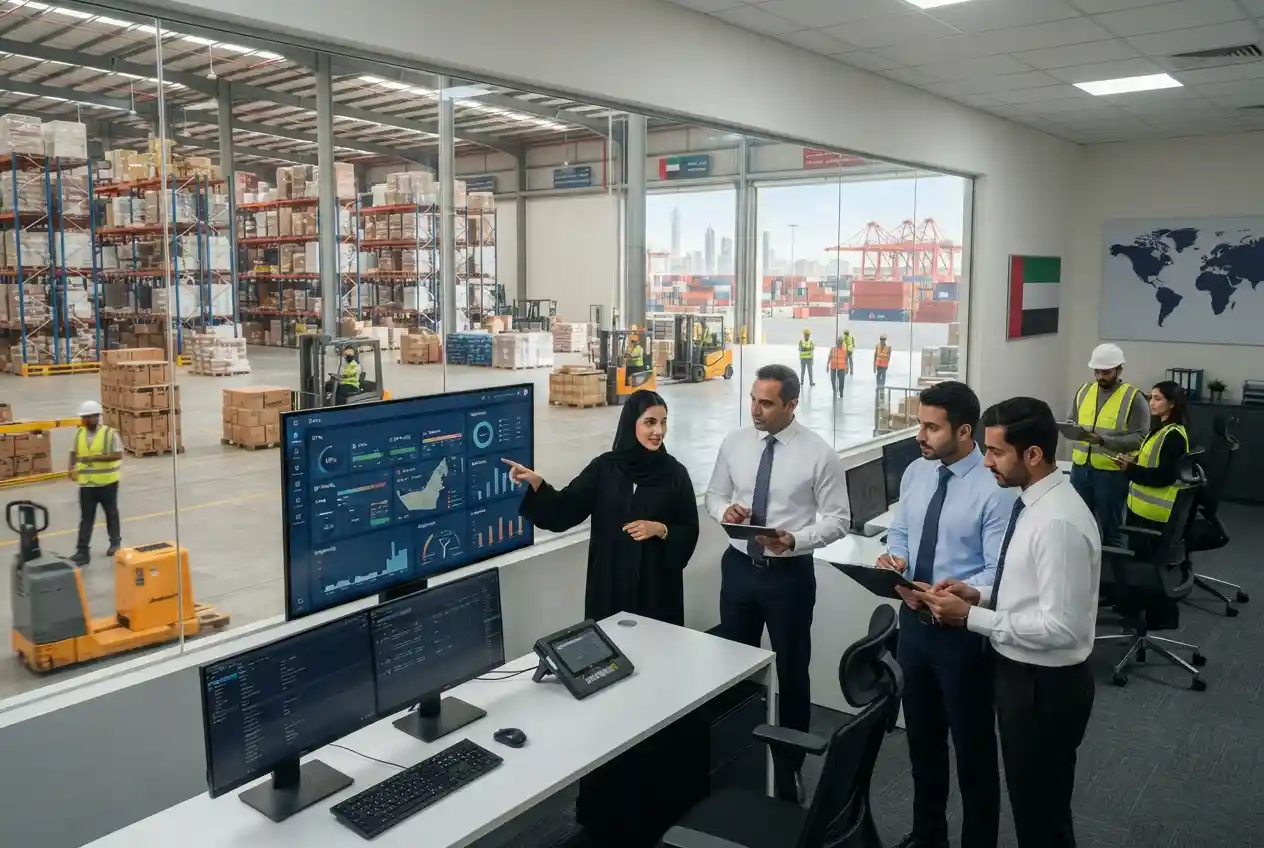
Businesses depend on a reliable flow of materials, products, information, and services. From sourcing raw materials to delivering finished goods to customers, every stage of this process can influence cost, speed, quality, and customer satisfaction. Supply chain management provides a structured approach to coordinating these activities and managing the relationships and resources involved.
The UAE’s position as a major regional commercial, logistics, and trading hub makes supply chain performance particularly important for many businesses. Companies may work with suppliers and customers across multiple countries while relying on ports, airports, warehouses, freight providers, distributors, and technology platforms.
A strong supply chain strategy therefore needs to look beyond purchasing products at the lowest price. Businesses must also consider supplier reliability, inventory, transportation, information flow, quality, risk, procurement, and customer requirements.
What Is Supply Chain Management?
Supply chain management is the coordinated management of activities involved in sourcing, purchasing, producing, storing, transporting, and delivering goods or services.
It connects suppliers, internal business functions, logistics providers, distributors, and customers. The objective is to ensure that the right resources reach the right place at the right time while balancing cost, quality, availability, and operational risk.
For some businesses, the supply chain may be relatively simple. For others, it can involve multiple suppliers, manufacturing facilities, warehouses, transport providers, customs processes, technology systems, and distribution channels.
Why Supply Chain Management Matters in the UAE
The UAE serves as an important gateway between markets in the Middle East, Asia, Africa, and Europe. Businesses involved in trading, manufacturing, retail, e-commerce, construction, food, healthcare, and other sectors may rely on complex regional or international supply networks.
Disruptions at any point can affect the entire operation. A delayed shipment can create inventory shortages. A supplier quality issue can lead to customer complaints. Poor demand forecasting can leave a company with excess stock or insufficient products.
Effective supply chain management helps businesses understand these dependencies and establish processes for managing them.
Key Components of Supply Chain Management
Procurement
Procurement involves identifying business requirements, selecting suppliers, negotiating terms, placing orders, and managing purchasing activities.
Effective procurement looks beyond price. Supplier quality, delivery performance, reliability, payment terms, capacity, compliance, and continuity can all affect the overall value of a purchasing decision.
Businesses that need more specialized support can also explore procurement services as part of their broader supply chain strategy.
Supplier Management
Suppliers can have a direct effect on quality, availability, cost, and customer service. Businesses should therefore establish appropriate methods for evaluating and monitoring important suppliers.
Supplier management can include performance reviews, quality requirements, service-level expectations, contract management, issue escalation, and periodic reassessment.
Inventory Management
Inventory decisions involve balancing availability against the cost of holding stock. Too little inventory can result in missed sales or production interruptions, while excessive inventory can tie up working capital and increase storage costs.
Businesses need inventory policies that reflect demand patterns, supplier lead times, product characteristics, customer expectations, and the consequences of stockouts.
Logistics Management
Logistics management focuses on the movement and storage of goods. It can involve transportation planning, warehousing, order fulfillment, shipment tracking, delivery coordination, and related activities.
For companies operating across the UAE or internationally, logistics decisions can significantly influence delivery times and customer experience.
Demand Planning
Supply chains perform better when purchasing and inventory decisions are connected to realistic expectations about demand.
Businesses can use historical sales information, market conditions, customer orders, seasonal patterns, and other relevant information to improve demand planning. Forecasts will never be perfect, but structured planning can reduce avoidable surprises.
Supply Chain Management and Procurement Management
Procurement is an important part of supply chain management, but the two concepts are not interchangeable.
Procurement management focuses primarily on acquiring goods and services from suppliers. Supply chain management takes a broader view of how those purchases interact with inventory, production, transportation, warehousing, customer demand, and distribution.
A procurement team may negotiate a lower purchase price, but that decision should also consider delivery reliability, minimum order quantities, quality, storage requirements, and other supply chain implications.
Supply Chain Visibility
Visibility is one of the most important factors in modern supply chain management. Businesses need reliable information about orders, inventory, shipments, supplier performance, and customer demand.
Without visibility, management may discover a problem only after it affects operations. For example, a delayed shipment may remain unnoticed until inventory reaches a critical level.
Technology can improve visibility by connecting purchasing, inventory, logistics, sales, and financial information. However, technology alone does not solve poor processes. Businesses need accurate data and clearly defined responsibilities as well.
Supply Chain Risk Management
Supply chains can contain numerous points of vulnerability. Companies may depend on a single supplier, a specific transport route, a specialized component, or one logistics provider.
These dependencies should be identified as part of broader business risk management.
Risk assessments can consider supplier concentration, geopolitical developments, transportation disruption, demand volatility, inventory shortages, quality failures, technology outages, and other factors relevant to the organization.
Supplier Diversification
Using multiple suppliers can reduce dependence on one source, although diversification may also increase management complexity and costs.
Businesses should assess whether alternative suppliers are realistically available and whether they meet required quality, capacity, pricing, and compliance expectations.
Alternative Logistics Options
Companies with important transportation dependencies should consider whether alternative carriers, routes, ports, airports, or logistics arrangements are available when normal operations are disrupted.
Strategic Inventory
For selected products or materials, maintaining appropriate safety stock can provide additional protection against supply interruptions. The correct level depends on demand, lead times, product value, storage capacity, and the consequences of shortages.
Quality in the Supply Chain
Supply chain performance is not only about availability and cost. Product and service quality also matter.
A supplier that consistently delivers low-quality products can create rework, returns, customer complaints, delays, and reputational problems. Supplier quality requirements should therefore be defined clearly for critical purchases.
Businesses with formal quality systems can integrate supplier controls into their broader quality management system.
This can help organizations establish supplier evaluation criteria, quality checks, corrective actions, and performance monitoring processes.
Technology in Supply Chain Management
Technology can support many supply chain activities. Enterprise resource planning systems, inventory platforms, warehouse management systems, procurement tools, transportation management software, and analytics can improve information flow and decision-making.
Automation can also reduce repetitive administrative work. For example, businesses may automate purchase-order workflows, inventory alerts, shipment updates, or supplier performance reporting.
However, technology implementation should begin with clearly defined business requirements. Buying software without improving underlying processes can simply digitize existing inefficiencies.
Supply Chain Management for SMEs
Small and medium-sized businesses may not have the resources of large corporations, but they can still implement effective supply chain practices.
SMEs can begin by identifying their most important suppliers, products, inventory items, and logistics dependencies. Simple supplier scorecards, inventory monitoring, purchasing procedures, and documented contingency arrangements can provide meaningful improvements.
As the business grows, these processes can become more sophisticated through better systems, analytics, supplier agreements, and dedicated procurement or supply chain roles.
Improving Logistics Management
Logistics decisions should be based on the needs of the business rather than focusing exclusively on transportation price.
Businesses should consider delivery reliability, transit times, shipment visibility, damage rates, storage requirements, customs-related processes where relevant, and customer expectations.
Clear coordination between sales, inventory, procurement, warehousing, and logistics teams can reduce avoidable delays and improve delivery planning.
Supply Chain Management and Business Continuity
Supply chain resilience is closely connected with business continuity. If a critical supplier or logistics provider fails, the company needs to know how essential operations will continue.
A business continuity plan can incorporate supply chain disruption scenarios and establish response procedures for critical dependencies.
This might include identifying alternative suppliers, defining escalation procedures, establishing emergency communication channels, and determining which inventory or services require priority during a disruption.
Common Supply Chain Management Mistakes
One common mistake is selecting suppliers primarily on purchase price. A lower unit cost may not provide better overall value if the supplier has unreliable delivery, poor quality, or limited capacity.
Another mistake is failing to maintain accurate inventory information. Poor data can result in unnecessary purchases, stockouts, excess inventory, and customer service problems.
Businesses may also overlook supplier concentration. Relying heavily on one supplier can create significant exposure even when that supplier has performed reliably in the past.
Finally, supply chain teams sometimes operate separately from other departments. Better coordination between procurement, finance, sales, operations, and logistics can significantly improve decision-making.
How UAE Businesses Can Strengthen Their Supply Chains
Businesses can start by mapping their most important supply chain activities and identifying the dependencies that could have the greatest impact on operations.
Management should then evaluate supplier performance, inventory requirements, transportation arrangements, procurement processes, and information flow.
Regular reviews can help identify changing risks. A supplier’s performance may deteriorate, customer demand may change, or the business may become dependent on a new technology platform.
Companies should also maintain clear communication between departments. Supply chain decisions often affect cash flow, sales, customer service, quality, and business continuity, making cross-functional collaboration essential.
Last Thoughts
Supply chain management helps UAE businesses coordinate procurement, suppliers, inventory, logistics, information, and customer requirements more effectively. It is a broad discipline that extends beyond purchasing and transportation.
Strong logistics management can improve the movement and storage of products, while effective procurement management can help businesses make better sourcing and purchasing decisions. Together, these functions contribute to a more reliable supply network.
The most effective supply chains balance cost, quality, availability, speed, and resilience. By improving visibility, managing supplier relationships, monitoring risks, and connecting supply chain decisions with wider business objectives, UAE companies can create stronger operational foundations and respond more effectively to changing market conditions.