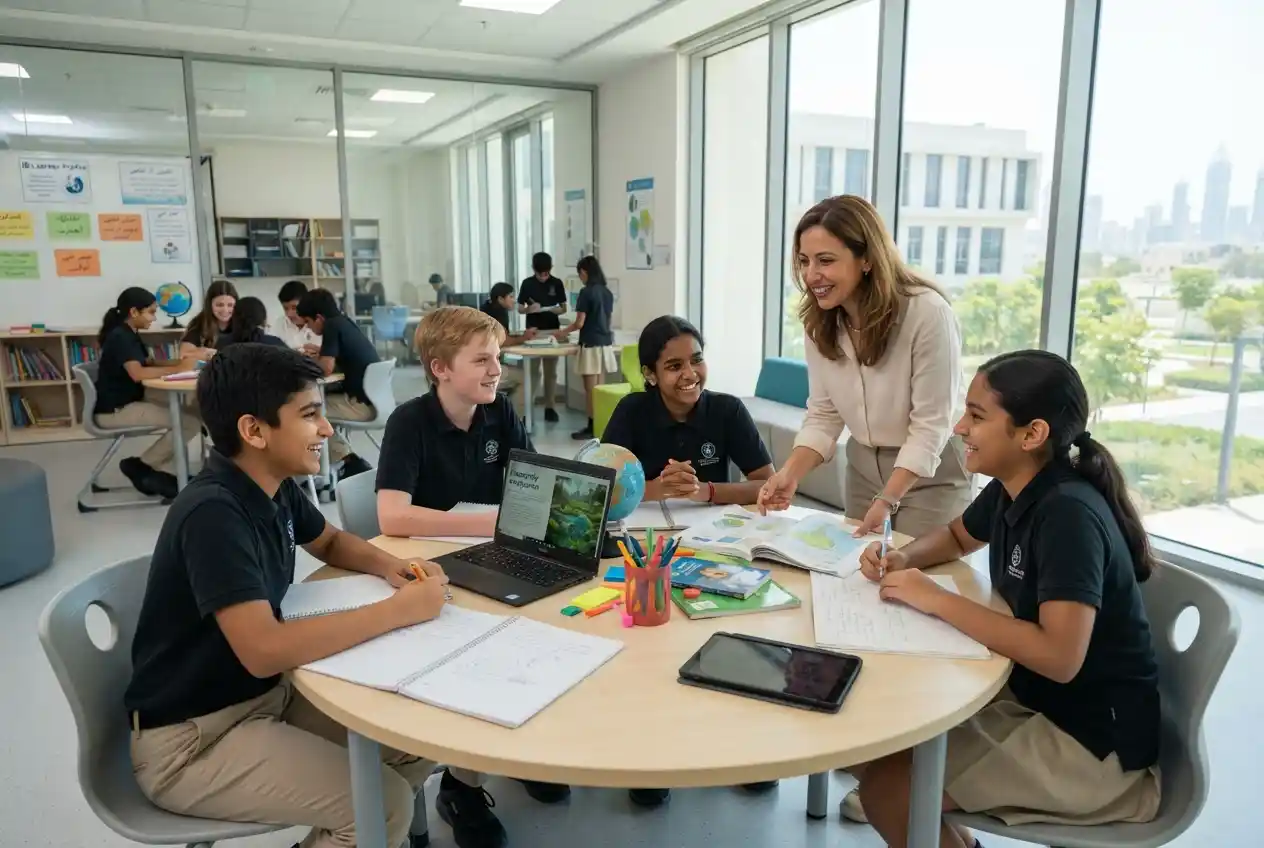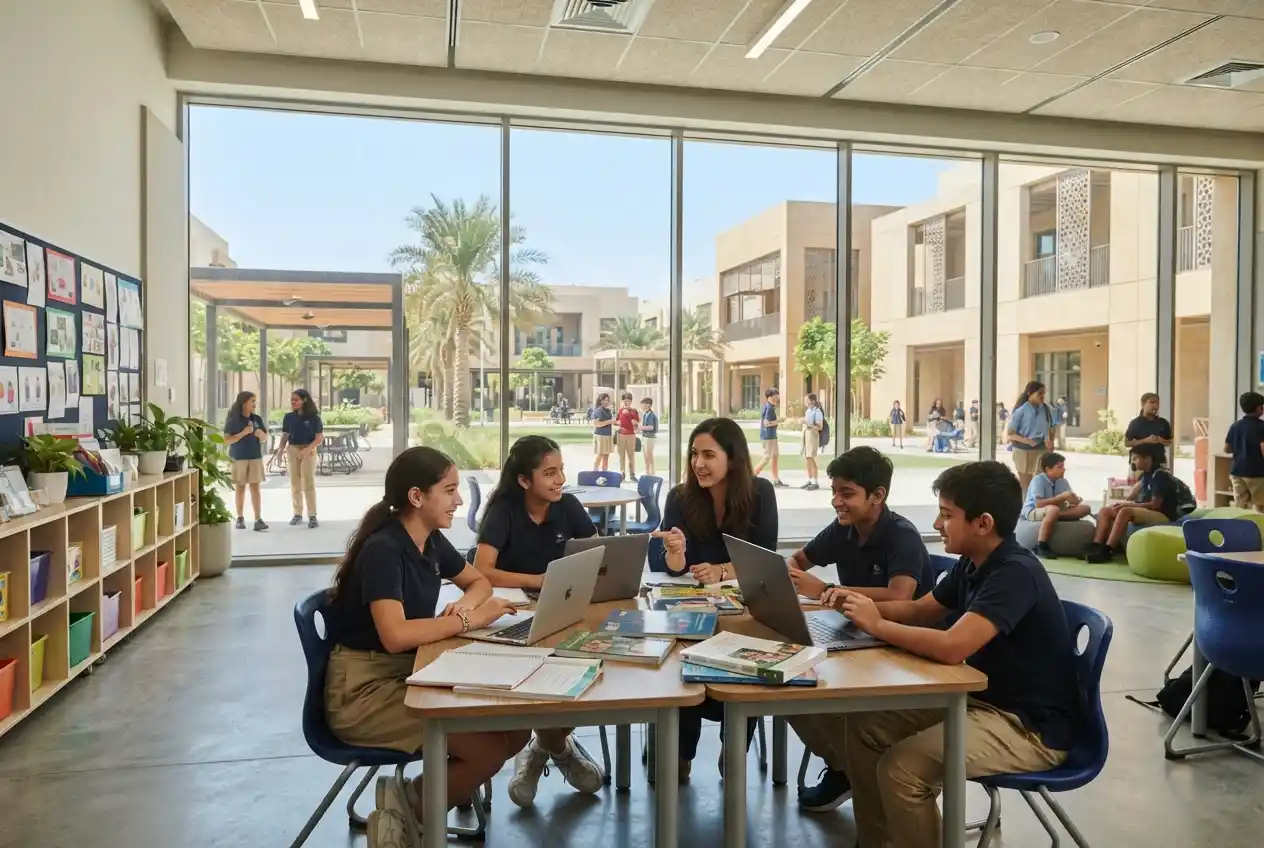










Educational research helps schools, universities, policymakers and education professionals understand what works in learning and where improvement is needed. In the UAE, research has an increasingly important role in supporting educational development, innovation, skills planning and evidence-based decision-making.
From classroom learning and teacher development to higher education, technology, assessment and workforce preparation, education studies can examine almost every part of the learning system. Good research does more than produce academic papers. It can provide evidence that helps institutions improve programmes, understand students and make better-informed decisions.
The UAE has also established national platforms and programmes to support scientific research. The official UAE Government portal highlights initiatives including the UAE Research Map and Researcher platform, while its National Research and Development framework identifies education as one of the fields covered by the country’s research system.
What Is Educational Research?
Educational research is the systematic study of teaching, learning, educational institutions, students, teachers, curricula and other factors that influence education. Researchers collect and analyse evidence to answer specific questions rather than relying only on assumptions or personal opinions.
Research questions can be broad or highly focused. A study might investigate how students respond to digital learning, whether a particular teaching approach improves understanding, how assessment affects motivation or which skills graduates need when entering employment.
The methods used depend on the research question. Quantitative studies may use surveys, test results or statistical data, while qualitative research may involve interviews, observations, focus groups or analysis of classroom experiences. Mixed-method research combines different approaches to develop a more complete understanding of an issue.
Why Educational Research Matters in the UAE
The UAE has a diverse education environment that includes public and private schools, universities, specialised institutions and different curricula. This diversity creates many opportunities for education studies examining how learners, teachers and institutions respond to different educational approaches.
Research can help identify successful practices while also revealing areas where improvement may be necessary. For schools, this could involve studying student engagement or teaching strategies. For universities, it might involve examining graduate outcomes, research productivity or learning technologies.
At a broader level, academic research can contribute evidence for education planning and policy development. The official UAE Government portal describes education as a major area of national development and provides dedicated information on school education, higher education, lifelong learning and online education.
Major Areas of Education Studies
Educational research covers a wide range of subjects. The most relevant area depends on the researcher’s question, institution and intended outcome.
Teaching and Learning
Research into teaching and learning examines how students acquire knowledge and skills. Researchers may compare teaching methods, investigate student participation or explore how classroom environments influence learning outcomes.
Educational Technology
Digital tools have created a significant area of academic research. Studies may explore online learning, artificial intelligence, digital classrooms, educational platforms and the effectiveness of technology-supported instruction.
The UAE Government itself identifies online training, eLearning platforms, future skills and learning artificial intelligence among its education-related areas, reflecting the growing role of technology within the education ecosystem.
Teacher Education
Teachers have a direct influence on classroom experiences, making teacher preparation and professional development important research areas. Studies can examine training programmes, teaching competencies, professional learning and the relationship between teacher practices and student outcomes.
Student Assessment
Assessment research examines how students’ knowledge, skills and progress are measured. Researchers may study examination systems, formative assessment, digital assessment tools or alternative methods of evaluating learning.
For a deeper understanding of how evidence about student performance is gathered and interpreted, educational research connects closely with educational assessment.
Higher Education
Universities provide an important environment for academic research. Studies may examine admissions, student experience, curriculum design, graduate employment, research performance, internationalisation and institutional development.
The UAE Government maintains dedicated information on higher education institutions, regulatory bodies, qualification recognition, scholarships, STEM investment and other aspects of the higher education system.
Educational Research Methods
A strong research project begins with a clearly defined question. Researchers then select methods capable of producing useful evidence for that question.
Quantitative Research
Quantitative research uses numerical information to identify patterns, relationships or differences. Surveys, assessment results, attendance records and structured datasets can provide information that researchers analyse statistically.
This approach can be useful when researchers need to measure trends across larger groups of students or institutions.
Qualitative Research
Qualitative research focuses on experiences, perceptions and meanings. Interviews, observations and focus groups can help researchers understand why learners behave in particular ways or how teachers experience changes in educational practice.
For example, a statistical study might show that students are participating less in an online course, while interviews could help explain the reasons behind that pattern.
Mixed-Methods Research
Mixed-method research combines quantitative and qualitative evidence. This can be particularly useful when researchers want to understand both the scale of an educational issue and the experiences behind the numbers.
The method should always follow the research question rather than being selected simply because it is popular or convenient.
Academic Research and Evidence-Based Education
Academic research can strengthen education decision-making by providing evidence that can be examined, tested and discussed. Instead of introducing a new programme solely because it appears promising, institutions can evaluate its results and determine whether it is achieving its intended objectives.
This evidence-based approach can apply to curriculum design, teaching methods, assessment, student support, technology adoption and professional development.
Research does not mean that every educational decision can be reduced to a single number. Education involves human behaviour, social factors and different learning environments. Good academic research therefore considers context and acknowledges the limitations of the evidence.
The Role of Research in Education Improvement
Educational improvement requires an understanding of existing performance and the reasons behind it. Research can help identify gaps between intended outcomes and actual learner experiences.
For example, if students achieve lower results in a particular subject, research can investigate whether the issue relates to curriculum design, teaching resources, prerequisite knowledge, assessment methods or other factors.
This creates a connection between educational research and education standards. Standards define expectations, while research can help institutions understand whether those expectations are being achieved and what changes may improve outcomes.
Research and Education Quality
Quality education depends on more than infrastructure or examination results. It also involves effective teaching, appropriate curricula, student support, relevant skills and opportunities for meaningful learning.
Research provides a way to examine these different dimensions systematically. A school or university can use research findings to identify strengths, understand challenges and evaluate whether an intervention has produced meaningful improvement.
This makes educational research an important supporting component of quality education. Research itself does not guarantee better outcomes, but it can provide the evidence needed to make improvement efforts more deliberate and measurable.
Educational Research and Data
Modern education generates substantial amounts of information. Student performance, attendance, course participation, survey responses and institutional records can all contribute to research when collected and handled appropriately.
This creates an important connection between research and education statistics. Statistical information can reveal patterns that are difficult to see through individual observations alone.
However, data should always be interpreted carefully. A correlation between two variables does not automatically prove that one caused the other. Researchers need appropriate methods, reliable data and careful interpretation to avoid drawing unsupported conclusions.
Educational Research in Universities
Universities are central to academic research because they bring together researchers, students, laboratories, libraries and specialised knowledge. Education departments may conduct studies directly related to teaching and learning, while researchers in other disciplines can contribute to education through psychology, sociology, technology, economics and public policy.
Research can also give postgraduate students opportunities to develop analytical and academic skills. Master’s and doctoral projects often involve identifying a research problem, reviewing existing literature, collecting evidence, analysing findings and presenting conclusions.
The UAE Government’s scientific research framework includes education among recognised research fields, reinforcing the place of education within the country’s broader research ecosystem.
How Research Can Support Education Policy
Education policy affects institutions, teachers, students and families, so decisions in this area can have broad consequences. Research can provide policymakers with evidence about educational needs, programme outcomes and possible implementation challenges.
This makes educational research closely connected to education policy. When reliable evidence is available, policymakers can use it alongside professional expertise, consultation and other considerations when evaluating reforms.
Research can also support the evaluation stage after a policy has been introduced. Instead of assuming that a reform has worked, researchers can examine outcomes and identify areas that may require adjustment.
Challenges in Educational Research
Educational research is valuable, but it is not always simple. Schools and universities operate in complex environments, and the same intervention may produce different results among different groups.
Researchers also need to consider sample size, data quality, research design, participant privacy and the limitations of their conclusions. Findings from one institution should not automatically be treated as representative of every school or university.
Another challenge is ensuring that research findings reach the people who can use them. A high-quality academic study has limited practical value if teachers, administrators or policymakers cannot understand its implications.
How to Evaluate an Educational Study
Readers do not need to be professional researchers to ask useful questions about an academic study. Before relying on a finding, consider who conducted the research, what question was investigated and which methods were used.
It is also useful to examine the sample, evidence, limitations and conclusions. Strong research generally explains how the findings were produced rather than presenting conclusions without supporting evidence.
Readers should also distinguish between an academic research paper, a policy report, an opinion article and a news story summarising research. These sources can serve different purposes and should not automatically be treated as equivalent.
The Future of Educational Research in the UAE
As education continues to evolve, new research questions will emerge. Artificial intelligence, digital learning, future skills, personalised education and changing workforce requirements are likely to remain important areas of investigation.
The UAE’s wider research ecosystem provides opportunities for researchers to study local educational priorities while contributing to international academic discussions. National research platforms and programmes can also help connect researchers, institutions and research interests.
For education leaders, the value of research will increasingly depend on how effectively evidence can be translated into practical improvements. The strongest connection is not simply between research and publication, but between reliable evidence, informed decisions and measurable educational outcomes.
Key Takeaways
Educational research provides a structured way to understand how education works and how it can improve. In the UAE, it can contribute to better teaching practices, stronger programmes, informed policy, effective assessment and more responsive education systems.
Whether the subject is classroom learning, higher education, technology, teacher development or student outcomes, well-designed academic research can turn questions into evidence. As the UAE continues to invest in education, skills and research, education studies will remain an important part of understanding what learners and institutions need for the future.