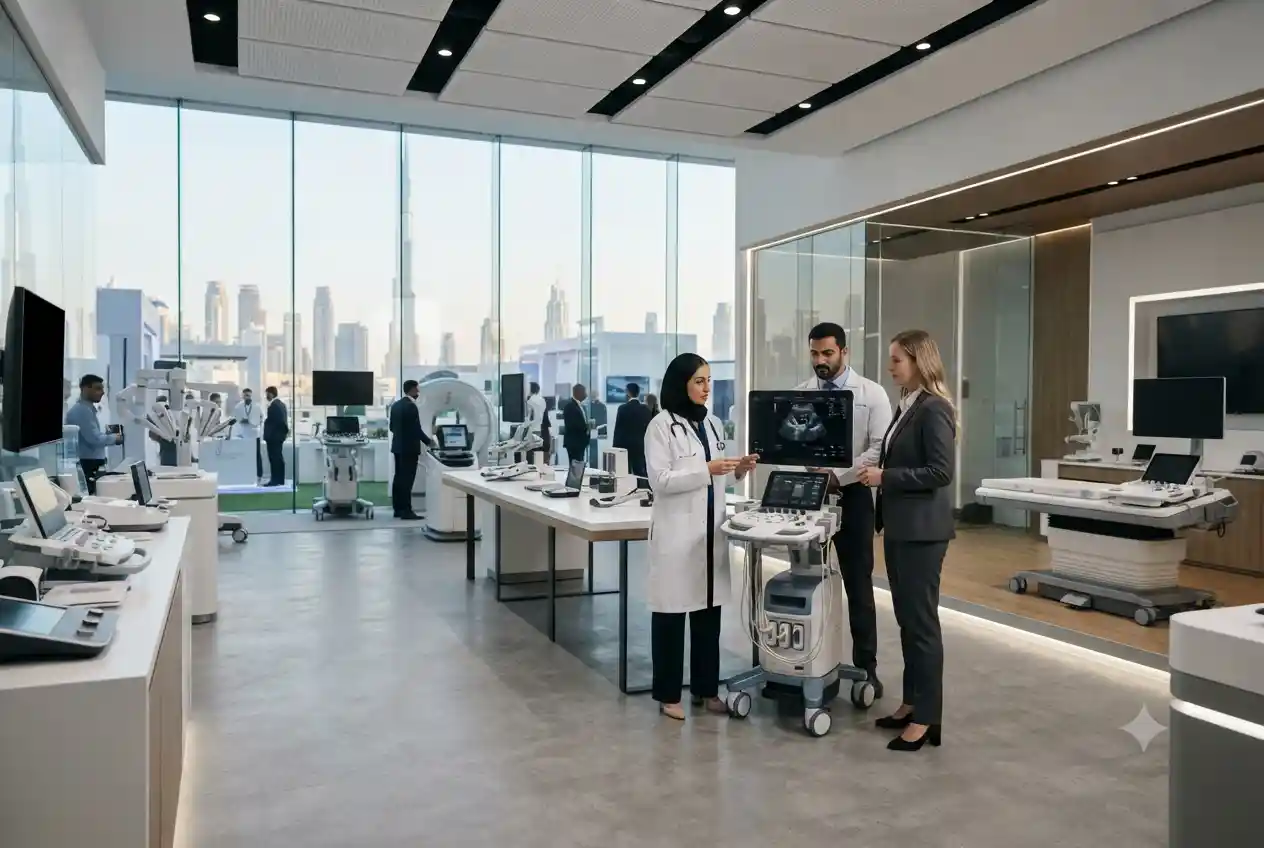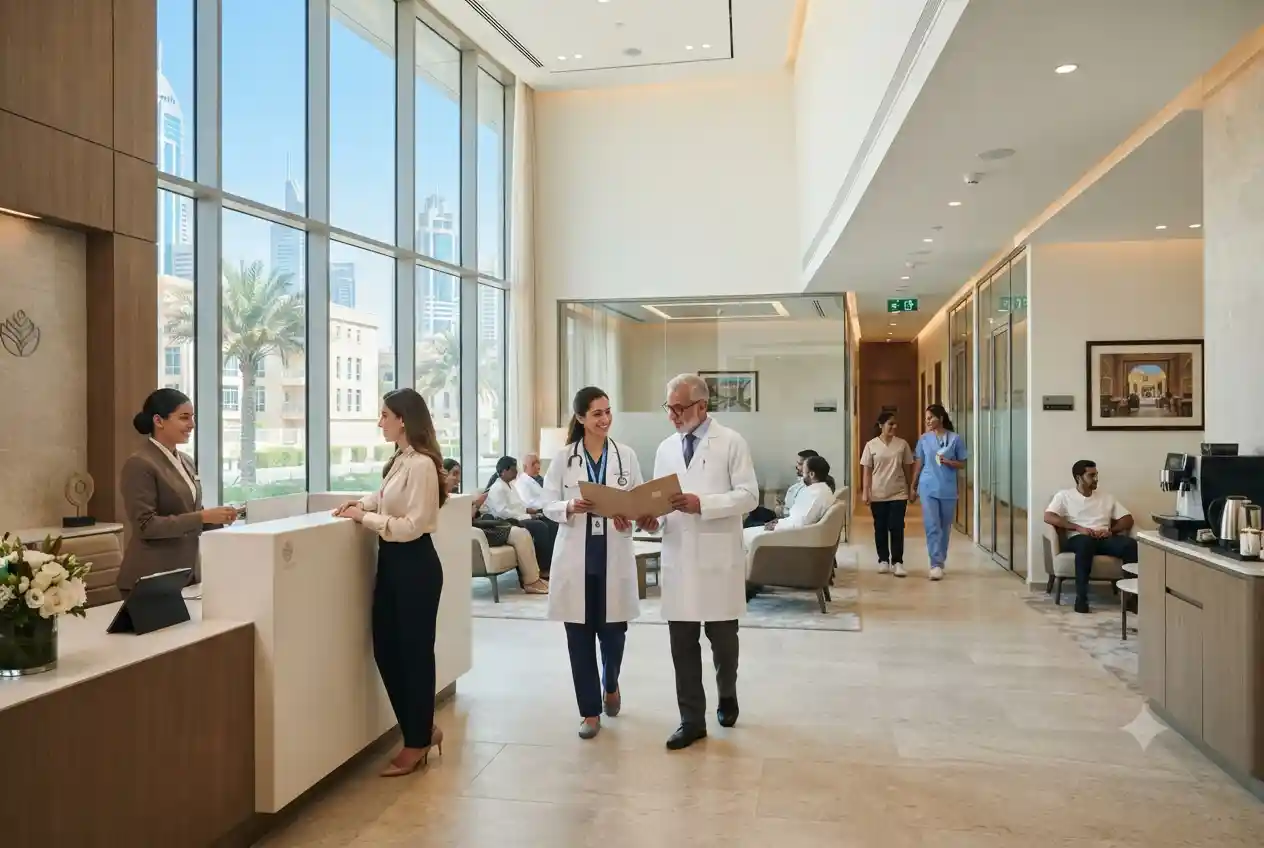
Leader Healthcare FZCO is a Dubai-based healthcare and medical technology company serving the UAE and wider Middle East market. The organisation works across medical equipment, healthcare technology, clinical solutions and related services, connecting healthcare providers with products and technologies designed for different medical environments.
For people searching for leader healthcare fzco, the company is relevant to the broader UAE healthcare ecosystem rather than functioning primarily as a conventional hospital or outpatient clinic. Its activities are centred on healthcare products, medical technologies, specialised solutions and support for healthcare professionals and institutions.
What Is Leader Healthcare FZCO?
Leader Healthcare is a healthcare solutions company based in Dubai. Its business covers medical technologies and products used across different areas of healthcare, with a portfolio that includes solutions for hospitals, clinics, laboratories, dental practices and other healthcare environments.
The company operates in a sector where healthcare providers increasingly depend on specialised equipment and technology to support diagnosis, treatment, monitoring and patient care. As a result, medical technology companies play an important role alongside hospitals, clinics and healthcare professionals.
Leader Healthcare’s business model is therefore different from that of a healthcare provider that directly treats patients. Instead, it operates within the healthcare supply and technology ecosystem, supporting medical organisations with products and solutions that can be integrated into clinical workflows.
Leader Healthcare FZCO Dubai UAE
Leader Healthcare FZCO Dubai UAE is positioned within Dubai’s growing healthcare and medical technology market. Dubai has developed into an important regional hub for healthcare services, medical innovation, distribution and business operations, making the emirate a strategic location for companies serving the wider region.
The company’s Dubai presence enables it to work with healthcare organisations and professionals across the UAE while also supporting broader regional activities. Customers evaluating medical technology suppliers typically consider factors such as product quality, technical support, regulatory requirements, availability and after-sales service alongside price.
For healthcare institutions, selecting the right supplier can be an important operational decision because medical equipment often becomes part of a long-term clinical workflow. Compatibility, training, maintenance and product support can therefore matter as much as the initial purchase.
Medical Technology and Healthcare Solutions
Medical technology encompasses a wide range of products and systems used to prevent, diagnose, monitor and treat health conditions. Companies operating in this sector may work across several clinical disciplines, from diagnostics and patient monitoring to surgical, dental and laboratory technologies.
Leader Healthcare operates within this broader medical technology environment, supplying solutions intended for healthcare professionals and institutions. The exact products available can change over time as manufacturers introduce new technologies and healthcare requirements evolve.
Medical Equipment
Medical equipment is fundamental to hospitals and clinics. Depending on the clinical area, equipment may support examination, diagnosis, treatment, monitoring or rehabilitation.
Healthcare institutions need to evaluate equipment according to clinical requirements, regulatory considerations, technical specifications and expected usage. A product that works well in one medical environment may not necessarily be appropriate for another, which is why consultation with qualified clinical and technical teams is important.
Diagnostic Technologies
Diagnostic technology supports healthcare professionals in identifying and monitoring medical conditions. Modern healthcare relies on a combination of clinical examination, laboratory testing, imaging and other diagnostic tools.
Medical technology suppliers can contribute to this process by providing equipment and solutions used by laboratories, hospitals and specialist clinics. Reliable equipment, appropriate installation and technical support are important considerations when healthcare organisations evaluate diagnostic solutions.
Dental Healthcare Solutions
Dental practices depend on specialised equipment and technologies for diagnosis, treatment and patient management. Dental technology can include imaging systems, treatment equipment, instruments and digital workflows.
For dental providers, technology selection often involves considering clinical performance, workflow integration, training requirements and ongoing service support. Suppliers serving this sector therefore need to understand both the technical and practical requirements of dental professionals.
Why Medical Technology Companies Matter in the UAE
The UAE’s healthcare system depends on a large network of organisations beyond hospitals and clinics. Medical equipment manufacturers, distributors, technology providers and healthcare solution companies all contribute to the functioning of the sector.
Medical technology companies help healthcare institutions access equipment and specialised solutions required for modern clinical environments. They can also support implementation, training and maintenance, depending on the product and supplier arrangement.
This makes companies such as Leader Healthcare relevant to the wider healthcare ecosystem even though their services are primarily business-to-business rather than direct-to-patient.
Leader Healthcare and Healthcare Professionals
Medical technology is ultimately used by healthcare professionals, meaning suppliers need to consider clinical workflows when introducing products. Doctors, nurses, technicians, dentists, laboratory professionals and hospital administrators may all have different requirements.
Successful technology implementation involves more than purchasing equipment. Healthcare organisations may need installation, user training, technical support, maintenance and appropriate procedures for operating the technology.
For this reason, healthcare buyers often evaluate suppliers based on their ability to provide ongoing support rather than simply comparing product prices.
Choosing a Medical Technology Supplier in Dubai
Healthcare organisations considering a supplier should begin by identifying the exact clinical requirement. The intended use of the product, patient population, facility size and existing technology infrastructure can all influence the right solution.
Regulatory compliance is another important consideration. Medical devices and healthcare technologies may be subject to regulatory requirements governing registration, importation, distribution and use. Buyers should ensure that the products and supplier arrangements comply with applicable UAE requirements.
Technical support is equally important. Healthcare equipment can affect clinical operations, so downtime or inadequate maintenance may create operational challenges. Buyers should therefore clarify warranty conditions, servicing arrangements, replacement parts, training and response procedures before finalising a purchase.
Leader Healthcare in the UAE Healthcare Ecosystem
Dubai’s healthcare sector combines public and private hospitals, specialist clinics, laboratories, pharmacies, home healthcare providers and medical technology companies. This creates a diverse ecosystem where different organisations contribute to patient care at different stages.
Leader Healthcare operates on the technology and solutions side of this ecosystem. Its role demonstrates how the healthcare industry extends beyond the organisations that patients directly visit.
Readers researching the wider market can explore our upcoming guide to healthcare companies in the UAE, which will cover different healthcare organisations and businesses operating across the country.
Medical Technology Trends in the UAE
The healthcare technology landscape continues to evolve as providers adopt digital systems, advanced diagnostic tools, connected devices and more specialised medical equipment. Healthcare organisations are increasingly interested in technologies that can improve workflow efficiency while supporting clinical decision-making and patient safety.
Artificial intelligence, digital health platforms, remote monitoring and connected medical devices are also influencing conversations around the future of healthcare. However, technology adoption needs to be driven by genuine clinical and operational requirements rather than novelty alone.
Healthcare organisations must consider factors such as data protection, interoperability, staff training, cybersecurity, regulatory compliance and long-term costs when evaluating new technologies.
What Healthcare Buyers Should Consider
Before purchasing medical technology, organisations should establish clear requirements and compare suitable solutions. Important considerations can include clinical functionality, regulatory status, compatibility with existing systems, ease of use and total cost of ownership.
Training should also be considered from the beginning. Even advanced equipment can provide limited value if staff do not receive appropriate instruction or if the technology does not fit naturally into existing workflows.
After-sales service is another important factor. Healthcare providers depend on reliable equipment, and access to maintenance and technical assistance can help reduce operational disruption.
Leader Healthcare FZCO and the Future of Medical Solutions
As healthcare providers across the UAE continue to modernise their facilities, demand for specialised medical technologies is likely to remain an important part of the healthcare market. Companies operating in this field can help healthcare organisations evaluate and implement products that support clinical services.
For Leader Healthcare FZCO, operating from Dubai provides access to a healthcare market that includes major hospitals, specialist providers, laboratories and private medical centres. The company’s position within medical technology gives it a different but important role compared with direct healthcare providers.
How Medical Technology Reaches Hospitals and Clinics in the UAE
Medical technology usually reaches a hospital or clinic through a chain that starts with a manufacturer and passes through distributors and local suppliers. International manufacturers often rely on UAE-based partners because those partners understand local registration rules, import procedures and the practical needs of hospitals and clinics. A local supplier can also hold stock, arrange faster delivery and provide engineers who work closely with hospital staff. This local presence matters when a device stops working, because every hour of downtime can delay diagnosis or treatment. For buyers, this is why the supplier’s local team, spare-parts availability and response time are often more important than a small difference in price. A supplier that can install equipment, train staff and return quickly for repairs reduces risk for the whole facility.
Free Zone Companies and Dubai’s Healthcare Market
The letters FZCO stand for a free zone company, a business structure used by many companies operating from Dubai’s free zones. Free zones allow companies to operate under their own licensing framework while serving customers across the UAE and the wider region. For healthcare technology firms, this structure supports import, storage, distribution and re-export of medical products, which is useful in a market that serves many countries from one hub. Dubai’s position as a trade and logistics centre also helps suppliers bring products from Europe, Asia and North America to hospitals across the Middle East. Buyers dealing with a free zone company should still check the same fundamentals as with any supplier: product registration, warranty terms, service capacity and the ability to support equipment over its full working life.
In Summary
Leader Healthcare FZCO is part of Dubai’s medical technology and healthcare solutions ecosystem, supplying products and technologies that support healthcare organisations and professionals. Its role is distinct from hospitals and clinics because its primary focus is on healthcare products, technology and related solutions rather than direct patient treatment.
For organisations searching for leader healthcare fzco or leader healthcare fzco dubai uae, evaluating product suitability, regulatory requirements, technical support, training and after-sales service is essential when considering any medical technology supplier.