








Choosing the right fashion designing course can be the first major step toward building a career in fashion. A good course should do more than teach students how to draw clothing. It should help them understand fabrics, silhouettes, garment construction, colour, fashion history, visual communication, creative research, and the commercial side of the industry.
The UAE provides several education and training pathways for people interested in fashion and creative industries. Dubai in particular has a broad higher-education and training ecosystem, with universities, colleges, and specialist institutions serving local and international students. The official Dubai education portal notes that international and expatriate students should check individual institutions for their admission requirements and conditions.
For students considering fashion education, the best course depends on their career objective. Someone who wants to become a fashion designer may need a comprehensive design programme, while someone interested in illustration, styling, merchandising, or creative direction may benefit from a more specialised route.
What Is a Fashion Designing Course?
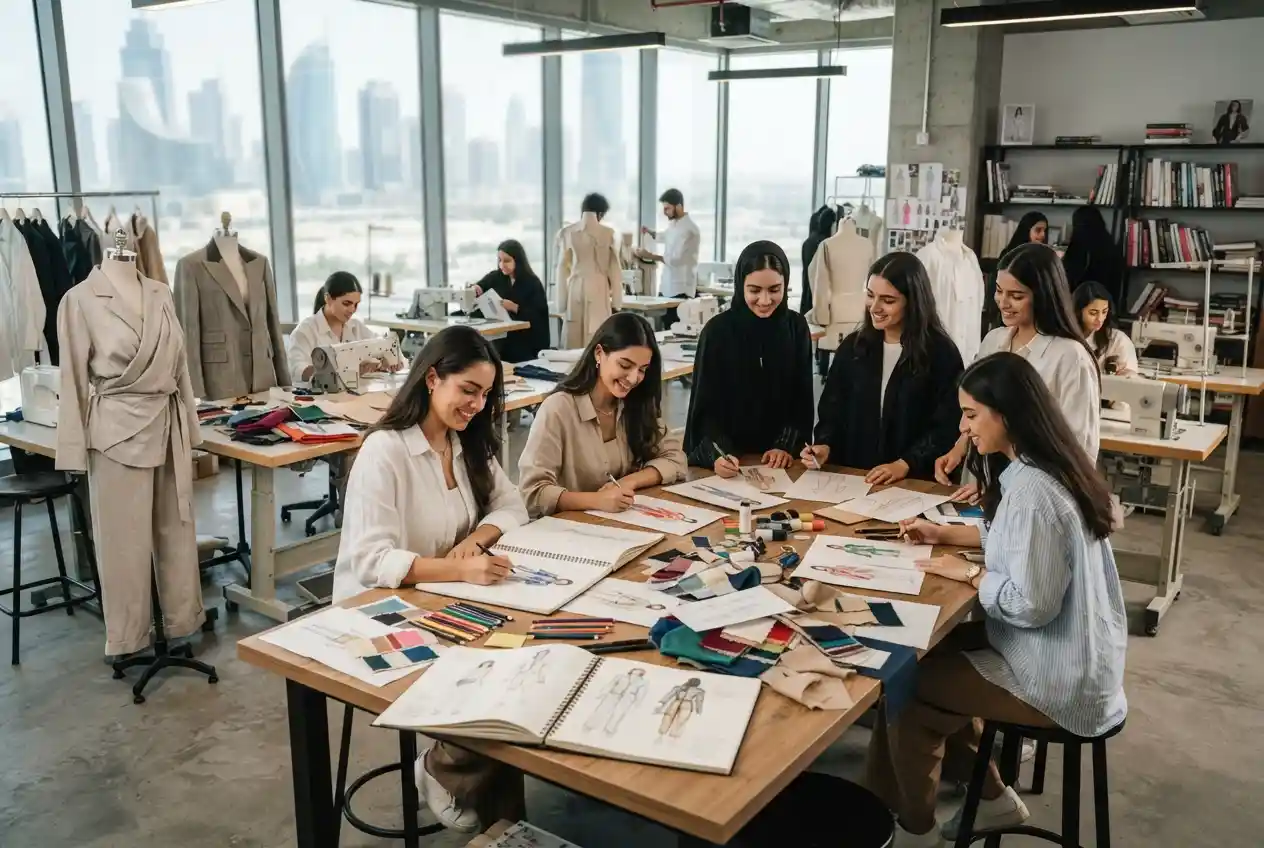
A fashion designing course introduces students to the creative and technical processes involved in developing clothing and fashion collections. Depending on the level and institution, the curriculum may cover fashion drawing, design development, textiles, garment construction, pattern development, fashion history, colour theory, research, presentation, and portfolio development.
Students generally move from basic concepts toward more developed design projects. They may begin by learning how to observe proportions and draw garments before progressing to complete looks, collections, technical drawings, and final presentations.
The strongest programmes combine studio practice with theoretical knowledge. This balance matters because professional fashion design requires both creative thinking and the ability to turn ideas into workable products.
What Do You Learn in a Fashion Designing Course?
The exact curriculum varies, but several subjects are common across fashion education.
Fashion Design Fundamentals
Students learn how clothing is designed and how individual garments relate to a wider collection. This can include silhouettes, proportions, colour combinations, design principles, and visual balance.
Textiles and Materials
Understanding fabrics is essential. Students should learn how different materials behave, how they drape, how they respond to construction techniques, and how fabric selection affects the final appearance of a garment.
Fashion Illustration
Illustration helps designers communicate ideas before garments are produced. Students may learn figure drawing, garment rendering, fabric representation, colour application, and digital illustration.
Garment Construction
Design ideas need to become physical garments. Basic construction knowledge helps designers understand seams, finishes, measurements, patterns, fitting, and production limitations.
Fashion History
Fashion is influenced by culture, history, art, technology, and society. Studying previous periods can help students recognise how styles evolve and how designers reinterpret historical references.
Portfolio Development
A professional portfolio brings a student’s best work together and demonstrates their creative process. It can become an important tool when applying for internships, jobs, freelance projects, or advanced study.
How to Choose the Right Fashion Designing Course
Do not select a course based only on its title. Look carefully at the curriculum, duration, practical work, faculty, facilities, assessment methods, student projects, and progression opportunities.
Consider what you want to do after graduation. If your goal is to become a designer, prioritise a programme with substantial studio work and garment development. If you are interested in fashion communication, illustration, styling, or creative media, another programme may be more appropriate.
It is also worth checking whether the institution provides access to relevant studios, workshops, digital facilities, photography resources, and opportunities to display student work. Practical facilities can influence how much hands-on experience students receive.
Fashion Illustration Course: What Students Should Expect
A fashion illustration course can be useful for students who want to strengthen their visual communication skills. Fashion illustration is not simply about making beautiful drawings. It is a method of communicating garment concepts, proportions, materials, colours, details, and styling ideas.
Students may practise figure proportions, garment silhouettes, movement, fabric rendering, colour techniques, and presentation. Digital illustration may also be included, depending on the programme.
Strong illustration skills can benefit designers, stylists, fashion communicators, and creative professionals because visual concepts often need to be communicated quickly to clients, colleagues, manufacturers, or creative teams.
Building a Fashion Sketchbook
A fashion sketchbook can become one of the most useful tools during fashion education. It provides a place to collect references, experiment with silhouettes, record observations, test colours, develop concepts, and document the design process.
Do not treat a sketchbook as a collection of perfect drawings. The development process is often more valuable than producing a page of polished illustrations every time.
Use it to explore different directions. You can experiment with garment shapes, fabric ideas, cultural references, architectural forms, photography, historical clothing, nature, typography, or other visual sources that inspire a collection.
Over time, the sketchbook can demonstrate how an idea developed from initial research into a more refined fashion concept.
Why Fashion Sketches Matter
Fashion sketches help designers communicate ideas before production. A sketch can show the shape of a garment, placement of details, proportions, layering, accessories, and overall styling direction.
However, sketches should support the design process rather than replace technical knowledge. A beautiful illustration does not automatically prove that a garment can be produced successfully.
Students should therefore learn to combine creative sketches with practical information. Technical drawings, fabric references, measurements, construction details, and material notes can make a concept more useful for production.
Creating a Strong Fashion Design Portfolio
A fashion design portfolio should tell a visual story. Instead of collecting every assignment completed during a course, select projects that demonstrate your strongest skills and creative direction.
A portfolio might include:
- Design research and mood boards
- Concept development
- Fashion sketches and illustrations
- Colour palettes
- Textile and fabric research
- Technical drawings
- Garment development
- Completed pieces
- Professional photographs
- A final collection presentation
Show the process as well as the final result. Employers and admissions teams can learn more about your design thinking when they can see how an idea evolved.
Keep the presentation consistent and easy to navigate. A well-organised portfolio can demonstrate not only creative ability but also attention to detail and professional communication.
Fashion Education in the UAE
The UAE’s higher-education environment includes public and private institutions, while Dubai also has a substantial network of training providers. The Dubai government states that higher-education admission requirements differ by institution, particularly for expatriate and international students, so applicants should check the relevant institution directly before applying.
Students should also research the recognition and accreditation status of a programme before committing to it. Course titles can sound similar while offering very different academic depth and career outcomes.
Creative education in the UAE can also extend beyond fashion-specific degrees. Related disciplines such as visual arts, graphic design, photography, interior design, media, and communication can provide useful skills for fashion careers.
Can Related Creative Courses Help Fashion Students?
Fashion increasingly overlaps with photography, digital media, branding, marketing, e-commerce, and content creation. As a result, knowledge from another creative field can complement fashion design skills.
For example, a designer who understands photography may produce stronger campaign concepts. Someone with graphic design skills may communicate collections more effectively. A designer with marketing knowledge may have a better understanding of brand positioning and customer communication.
This interdisciplinary approach can be particularly useful for students who eventually want to build their own label rather than work exclusively as designers.
Fashion Master’s Degree: When Should You Consider One?
A fashion masters degree can be useful for graduates who want to deepen their design knowledge, explore research, specialise in a particular area, or prepare for advanced professional and academic opportunities.
A master’s programme is generally more specialised than an introductory course. Students may focus on areas such as fashion design, fashion management, textiles, sustainable design, fashion communication, or another related discipline, depending on the institution.
Before applying, consider whether postgraduate study supports your actual career goal. If you need practical industry experience, working or completing internships may sometimes be more valuable than immediately pursuing another qualification.
How to Compare Fashion Masters Programs
When comparing fashion masters programs, look beyond the programme name. Review the curriculum, faculty expertise, studio resources, research expectations, final project requirements, industry connections, and graduate outcomes where reliable information is available.
Also consider whether you want a design-focused programme or a management and business-oriented qualification. These can lead toward very different professional paths.
For students interested in academic progression, Dubai’s higher-education system provides a range of institutions and pathways, but admission criteria should always be confirmed directly with the institution offering the programme.
Fashion Education and Career Opportunities
Education can provide a foundation, but professional experience remains important. Students should look for opportunities to work on real projects, collaborate with photographers, assist designers, participate in exhibitions, enter competitions, or complete internships where appropriate.
A student who develops a strong portfolio alongside practical experience may be better prepared for entry-level opportunities after graduation.
Fashion education can lead toward many careers, including designer, fashion illustrator, stylist, textile designer, merchandiser, buyer, visual merchandiser, fashion marketer, creative producer, fashion photographer, or entrepreneur.
Those interested in the employment side of the industry can also explore our guide to fashion jobs in Dubai to understand the broader range of roles available across the UAE fashion sector.
Should You Study Fashion Design or Learn Through Experience?
There is no universal answer. Formal education can provide structured learning, feedback, studio practice, academic knowledge, and access to facilities. Independent learning and industry experience can provide flexibility and direct exposure to commercial work.
For some students, the strongest route combines both. A formal course can establish the fundamentals while internships, freelance projects, collaborations, and personal collections provide practical experience.
If you are unsure about committing to a multi-year programme, a shorter introductory course can help you test your interest before making a larger educational investment.
How to Prepare Before Starting a Fashion Course
You do not need to be an expert before starting, but developing basic creative habits can help. Practise drawing regularly, study clothing construction, visit exhibitions, research designers, observe how garments fit different body shapes, and maintain a visual reference library.
Start collecting images and ideas that inspire you. Analyse why a particular garment, campaign, collection, or photograph works instead of simply saving it.
Learning basic digital tools can also be beneficial. Fashion is increasingly connected with digital presentations, e-commerce, social media, photography, and brand communication.
What Makes a Fashion Student Stand Out?
Creativity is important, but originality does not mean making something unusual simply for attention. Strong students demonstrate curiosity, discipline, research ability, technical understanding, and a willingness to experiment.
They also learn to accept criticism. Design education involves repeated development, testing, correction, and refinement. Feedback from tutors and classmates can help identify weaknesses that are difficult to notice independently.
Professional habits matter too. Meeting deadlines, organising files, maintaining a clean workspace, documenting projects, and presenting work clearly are all skills that transfer directly into employment.
Fashion Designing Course and the UAE Market
The UAE’s fashion environment includes luxury retail, regional labels, modest fashion, international brands, e-commerce, events, advertising, and creative production. This diversity means students can potentially explore several areas rather than viewing fashion design as a single career path.
Students who understand local culture while developing international design awareness can also create a distinctive professional perspective. This can be particularly relevant to designers interested in modest fashion, regional aesthetics, or contemporary interpretations of traditional influences.
Wrapping Up
The right fashion designing course should give you more than a qualification. It should help you develop creative thinking, technical skills, visual communication, research ability, and a portfolio that can support your next career step.
Whether you begin with a full design programme, a fashion illustration course, specialist training, or later pursue a fashion masters degree, choose education based on your goals rather than the course title alone.
Build your sketchbook, develop strong fashion sketches, document your creative process, create a focused portfolio, and gain practical experience whenever possible. These habits can help transform fashion education into a foundation for a sustainable career in the UAE’s broader fashion and creative industries.