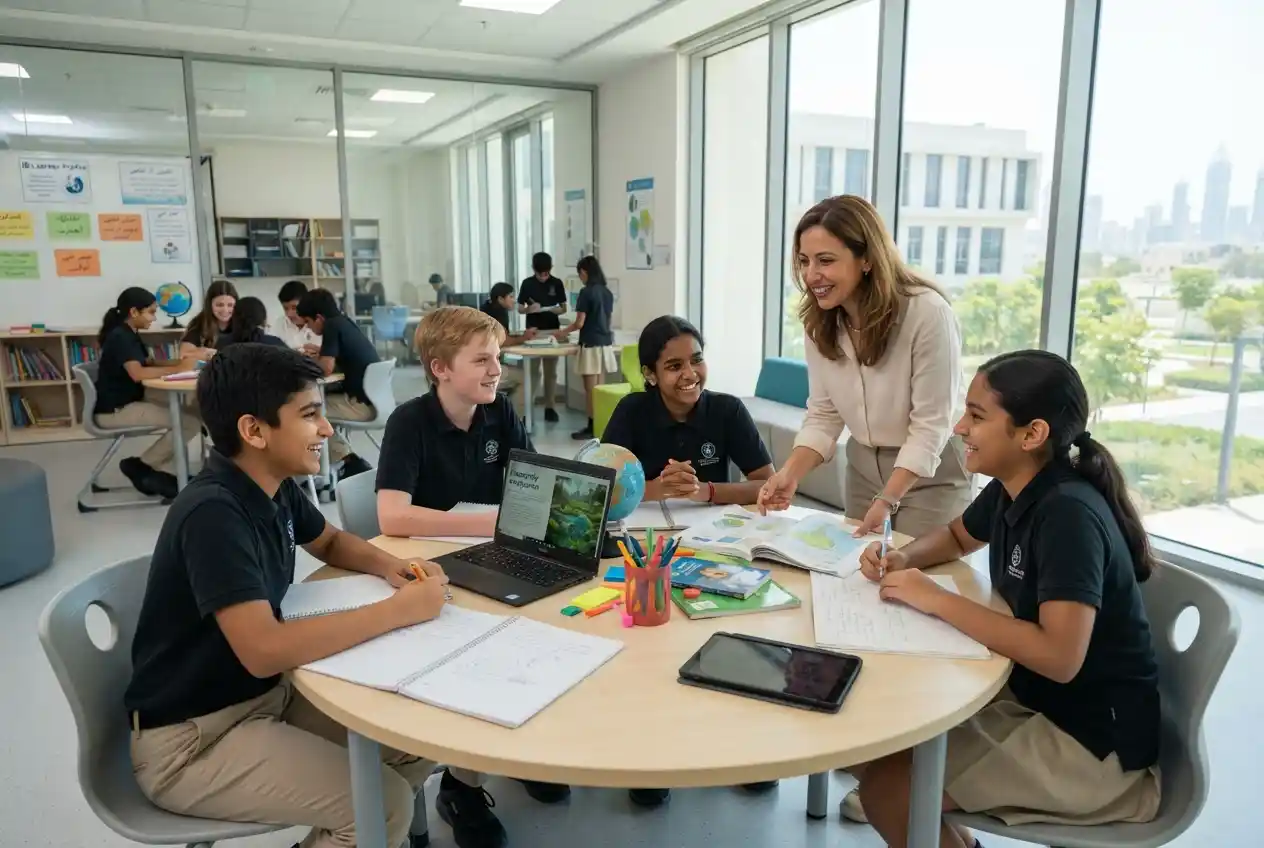









Student success is about more than achieving high grades. It involves developing effective study habits, understanding academic expectations, managing time, using available support, maintaining motivation, and building skills that remain valuable beyond graduation. For students in the UAE, these factors can make a meaningful difference throughout school, university, vocational training, and higher education.
Every learner has different strengths, responsibilities, and goals. Some students may be preparing for university, while others are completing a degree, studying online, or balancing education with employment. A successful approach therefore needs to be practical and adaptable rather than based on a single study method.
Students can improve their academic journey by setting clear objectives, developing consistent routines, monitoring their performance, seeking support early, and making effective use of the educational resources available to them.
What Does Student Success Mean?
Student success refers to a learner’s ability to make meaningful academic progress while developing the knowledge, skills, habits, and confidence needed for future goals. Academic achievement is one part of this process, but success can also involve completing a qualification, improving subject knowledge, developing professional skills, or successfully progressing to the next stage of education.
For one student, success may mean achieving strong examination results. For another, it may mean completing a difficult degree while working full time. The definition should therefore be connected to the learner’s circumstances and objectives.
Why Student Success Matters
Strong academic performance can create opportunities for further study, scholarships, internships, professional development, and employment. More importantly, effective learning habits can continue to benefit students after they leave formal education.
Students who learn how to organize their workload, evaluate information, communicate effectively, solve problems, and manage deadlines develop capabilities that extend beyond individual subjects.
Student success should therefore be viewed as a long-term process rather than a single examination result.
Key Factors That Influence Student Success
Academic outcomes are influenced by several factors. Understanding them can help learners identify areas where they can improve.
Clear Academic Goals
Students are more likely to maintain direction when they know what they are working toward. Goals can include improving a particular subject grade, completing a qualification, gaining admission to a desired program, or preparing for a specific career.
Long-term goals should be divided into smaller targets. For example, instead of simply aiming for better academic performance, a student can set weekly reading goals, assignment deadlines, revision targets, and practice schedules.
Effective Time Management
Managing time is one of the most important academic skills. Students often have multiple assignments, examinations, projects, classes, and personal responsibilities competing for attention.
A weekly schedule can help learners identify priorities and avoid leaving major tasks until the last minute. Study time should be allocated according to the difficulty and importance of each subject rather than divided equally without considering individual needs.
Consistent Study Habits
Regular study sessions are generally easier to maintain than relying on long periods of last-minute preparation. Consistency allows students to review material gradually and identify areas they do not understand.
Short, focused sessions can be particularly useful when combined with active learning techniques such as practice questions, self-testing, summarization, and explaining concepts in your own words.
Active Participation
Students should participate actively in their education rather than simply receiving information. Asking questions, joining discussions, completing practice activities, and seeking feedback can strengthen understanding.
Participation is particularly important in higher education, where students are often expected to think critically and apply concepts rather than simply memorize information.
Student Performance and Academic Achievement
Student performance can be measured through grades, assessments, projects, examinations, participation, practical work, and other academic requirements. However, performance should be monitored over time rather than judged by one result.
A student who receives a disappointing grade can use the result as feedback. Reviewing mistakes can reveal whether the problem involved preparation, understanding, time management, examination technique, or another issue.
This approach turns academic performance into a tool for improvement rather than simply a measure of success or failure.
How to Improve Academic Achievement
Improving academic achievement usually requires a combination of better planning, effective learning methods, and consistent effort.
Understand the Assessment System
Students should understand how their final results are calculated. Review the weighting of examinations, assignments, projects, presentations, participation, and other assessments.
This helps learners allocate study time appropriately and avoid overlooking smaller assessments that contribute to the final result.
Review Feedback
Feedback can identify specific areas for improvement. Instead of looking only at the grade, students should examine comments from instructors and determine what can be changed in future work.
If feedback is unclear, ask the instructor for clarification. Understanding why a mistake occurred is often more valuable than simply knowing the final mark.
Practice Regularly
Practice is especially important for subjects involving calculations, languages, technical skills, or problem-solving. Regular practice can reveal weaknesses before major examinations.
Use Reliable Learning Resources
Students should use textbooks, academic databases, course materials, university libraries, and other credible resources. Online information can be useful, but learners should evaluate the reliability and relevance of sources before using them in academic work.
Student Support and Success
Students do not need to manage every academic challenge alone. Educational institutions often provide academic advising, tutoring, library resources, career guidance, technical assistance, counseling, and other forms of support.
Using these services early can prevent smaller difficulties from becoming major problems. Our guide to student services in the UAE explains the types of academic and learner support students may encounter.
Students should familiarize themselves with available resources at the beginning of each academic year rather than waiting until they experience difficulties.
Student Success in Online and Distance Learning
Online and distance education can provide flexibility, but students often need stronger self-management skills because there may be fewer physical reminders of upcoming work.
Students studying remotely should establish a consistent study schedule, monitor deadlines, participate in virtual classes, communicate with instructors, and create a dedicated learning environment where possible.
Those considering flexible study can review our guides to online education in the UAE and distance learning in the UAE to understand different approaches to remote education.
How Parents Can Support Student Success
Parents can support learners by creating an environment that encourages responsibility, organization, and communication. Support does not mean completing academic work for the student. Instead, parents can encourage consistent routines, help learners identify practical goals, and provide appropriate support when challenges arise.
For younger students, parents can help establish study schedules and monitor school communications. As students become more independent, the emphasis can shift toward encouraging self-management and decision-making.
Students should ultimately develop ownership of their education and learn to communicate directly with teachers, advisors, and support staff.
Student Success in School Education
Academic success begins long before university. School students develop foundational skills in reading, writing, mathematics, communication, organization, and independent learning.
Primary and secondary education can also help learners discover their interests and identify potential future academic pathways. Students who develop strong study habits earlier may find the transition to higher education easier.
Our broader education cluster will cover school education in the UAE, including primary, secondary, and higher secondary education.
Student Success at University
University students generally have greater academic independence than school students. They may need to manage their own schedules, select courses, communicate with instructors, complete independent research, and balance multiple deadlines.
The transition can be challenging, particularly during the first year. Students can make it easier by attending orientation, meeting academic advisors, understanding degree requirements, and creating a realistic study routine.
Students should also monitor their academic progress throughout the semester instead of waiting for final examinations to discover problems.
Developing Better Study Techniques
Different subjects require different learning strategies. Memorization may be useful for certain factual information, while problem-solving, discussion, research, or practical application may be more effective for other subjects.
Useful techniques can include:
- Active recall through self-testing
- Spaced review of previously studied material
- Practice questions and past assessments where appropriate
- Summarizing concepts in your own words
- Creating structured study notes
- Explaining difficult concepts to another person
- Breaking large assignments into smaller tasks
- Reviewing mistakes and instructor feedback
The goal is not to use every technique. Students should identify the methods that improve their understanding and fit the subject they are studying.
Managing Academic Stress
Academic pressure can increase when students have multiple deadlines or feel uncertain about their performance. Good planning can reduce some avoidable pressure, but students should also recognize when they need additional support.
Breaking large tasks into manageable steps can make workloads feel more achievable. Maintaining reasonable routines around sleep, meals, physical activity, and study can also support overall wellbeing.
Students who feel overwhelmed should consider speaking with an appropriate academic advisor, counselor, or support professional through their institution.
Student Success and Career Planning
Academic success should connect with longer-term professional goals. Students can improve the value of their education by identifying skills and experiences that employers may expect in their chosen field.
Internships, projects, volunteering, professional events, communication skills, digital skills, and relevant extracurricular activities can complement academic qualifications.
Career planning should begin before graduation. Students can use career services to improve CVs, practice interviews, research career options, and identify opportunities relevant to their studies.
Student Success and Scholarships
Strong academic performance can be important for some education scholarships. Students who receive merit-based funding may also need to maintain specified academic standards to retain their awards.
This makes academic planning particularly important for students who depend on financial assistance. Our guide to education scholarships in the UAE covers scholarship types, eligibility, application considerations, and renewal requirements.
How to Track Your Academic Progress
Students can create a simple academic progress system to identify what is working and what needs improvement.
Track assignment deadlines, examination dates, grades, feedback, attendance requirements, and personal study goals. Review this information regularly rather than only at the end of a semester.
If performance starts to decline, identify the cause as early as possible. The solution may involve changing study methods, seeking tutoring, improving time management, speaking with an instructor, or reducing competing commitments.
Common Barriers to Student Success
Students can face different obstacles during their education. Common challenges include:
- Poor time management
- Unclear academic goals
- Procrastination
- Difficulty understanding particular subjects
- Insufficient preparation for assessments
- Limited use of academic support
- Balancing employment with education
- Technology problems in online study
- Personal or family responsibilities
- Lack of awareness about academic requirements
Identifying the specific barrier is the first step toward finding an appropriate solution.
Student Success for Working Professionals
Professionals studying alongside employment need realistic expectations. It may not be practical to use the same schedule as a full-time student.
Working learners should identify fixed study periods, prioritize high-value tasks, and review deadlines before accepting additional commitments. Flexible programs can help, but successful study still requires consistent effort.
Those considering an education qualification can explore our guide to education degrees in the UAE while planning how further study fits into their professional goals.
Building a Long-Term Student Success Plan
A useful student success plan should cover both immediate academic tasks and longer-term objectives.
Start by defining the qualification or academic milestone you want to achieve. Then identify the subjects, skills, grades, experiences, and deadlines that contribute to that goal.
Review the plan regularly and adjust it when circumstances change. A good plan is not rigid; it should help you make better decisions when workloads, priorities, or academic needs change.
Questions Students Should Ask Themselves
Regular self-reflection can help learners stay focused. Consider questions such as:
- What are my most important academic goals?
- Which subjects or skills need the most attention?
- Am I using my available study time effectively?
- What feedback have I received recently?
- Do I understand my upcoming assessment requirements?
- Which student support services could help me?
- How does my current education connect to my career plans?
- What can I change this week to improve my performance?
Last Thoughts
Student success in the UAE depends on more than grades. Strong academic achievement is supported by clear goals, consistent study habits, effective time management, active participation, reliable learning resources, and appropriate use of student support services.
Students should monitor their performance regularly and treat feedback as an opportunity to improve. Whether studying at school, university, online, or alongside a full-time job, learners can make meaningful progress by developing routines that match their circumstances.
Most importantly, students should understand that asking for support is part of successful learning. Academic advisors, instructors, tutors, career teams, libraries, and other learner services exist to help students navigate challenges.
With realistic planning, active learning, and a willingness to adjust when something is not working, students can build stronger academic performance while developing the skills and confidence needed for their future education and careers in the UAE.