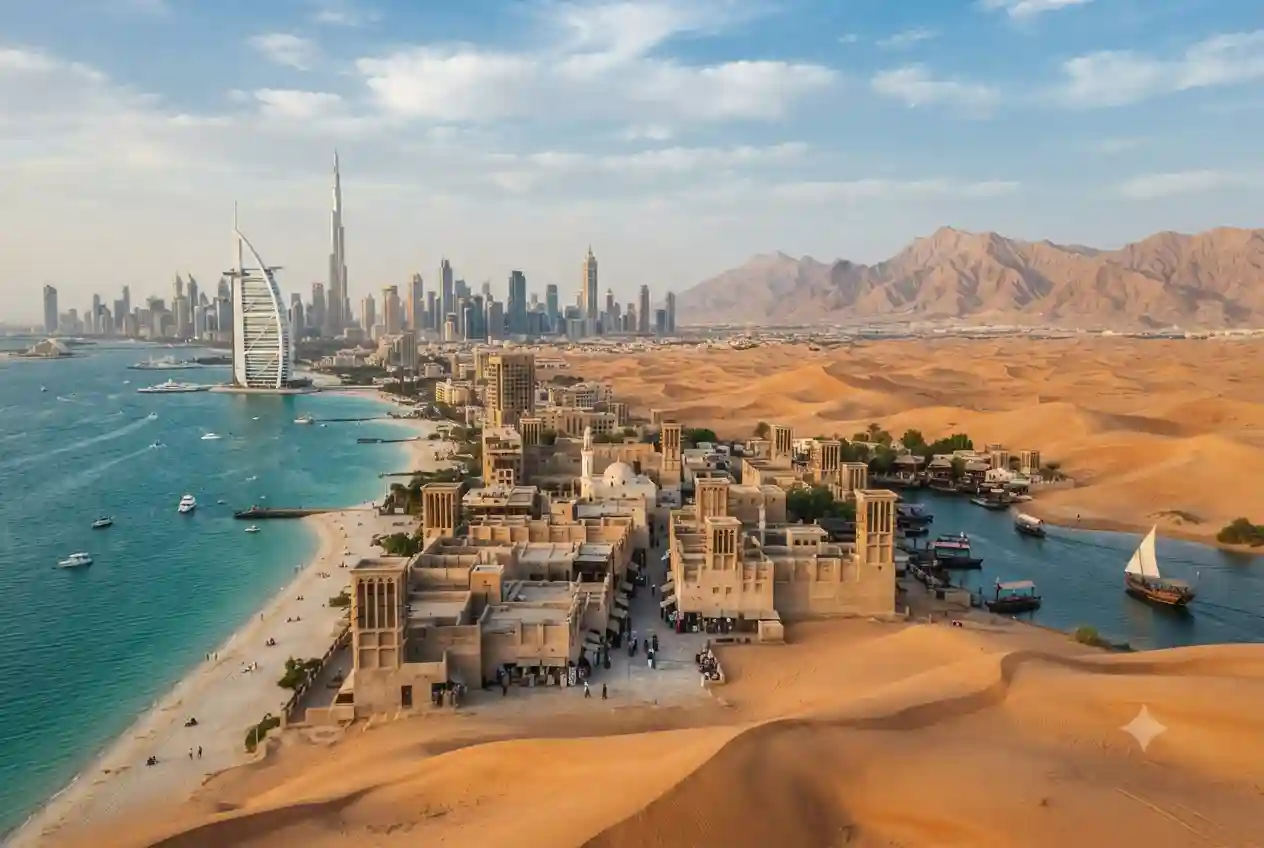
Ras Al Khaimah tourism offers a different side of the United Arab Emirates, combining dramatic mountain scenery, long beaches, desert landscapes, heritage sites, adventure activities, and resort experiences. As the northernmost emirate, Ras Al Khaimah has developed a distinctive tourism identity built around nature, outdoor experiences, culture, and relaxation.
For travellers who have already explored Dubai or Abu Dhabi, Ras Al Khaimah can provide a welcome change of scenery. Instead of concentrating mainly on skyscrapers and large urban attractions, the emirate makes its natural landscape part of the travel experience.
Jebel Jais, the Hajar Mountains, Al Jazeera Al Hamra, Dhayah Fort, Suwaidi Pearl Farm, Al Marjan Island, desert resorts, beaches, and coastal activities all contribute to the emirate’s appeal. The official destination authority describes Ras Al Khaimah as a destination spanning mountains, beaches, deserts, nature, culture, and adventure. official Ras Al Khaimah tourism information is useful when checking current attractions and planning a trip.
Why Ras Al Khaimah Tourism Is Growing in Popularity
Ras Al Khaimah has several characteristics that distinguish it from other UAE destinations. The emirate combines mountain, desert, and coastal environments within the same destination, allowing visitors to experience several types of landscapes during one holiday.
Its tourism appeal also comes from its history. The Ras Al Khaimah Tourism Development Authority says the emirate has a history stretching back around 7,000 years, with ancient forts, ruins, traditional settlements, and date farms forming part of its heritage. :contentReference[oaicite:0]{index=0}
At the same time, the emirate has developed a growing collection of resorts, adventure attractions, family experiences, and outdoor activities. This combination makes it suitable for both short weekend escapes and longer UAE holidays.
Jebel Jais: The Main Attraction of Ras Al Khaimah
Jebel Jais is arguably the most recognisable natural attraction associated with Ras Al Khaimah. Located within the Hajar Mountains, the area provides dramatic views, winding mountain roads, hiking opportunities, viewpoints, and adventure experiences.
At approximately 1,680 metres, Jebel Jais is the highest peak in the UAE. The destination authority highlights hiking, cycling, mountain drives, and the Jais Flight zipline among the experiences available around the mountain. :contentReference[oaicite:1]{index=1}
Even visitors who are not interested in extreme adventure can enjoy the mountain simply for its scenery. A drive through the mountain roads and a stop at a viewpoint can provide a completely different experience from the urban landscapes found elsewhere in the country.
Jais Flight
Jais Flight is one of Ras Al Khaimah’s best-known adventure attractions. The zipline carries visitors across the mountain landscape and is promoted by the destination authority as the world’s longest zipline. :contentReference[oaicite:2]{index=2}
It is particularly suited to travellers looking for a high-adrenaline experience. Visitors should check current operating conditions, age and weight requirements, booking arrangements, and weather restrictions before planning the activity.
Jais Viewing Deck Park
For visitors who prefer scenery to adrenaline, Jais Viewing Deck Park offers an easier way to experience the mountain environment. Elevated viewpoints provide opportunities for photography and quiet observation of the surrounding peaks and valleys.
The park can be incorporated into a scenic mountain drive and does not require visitors to commit to a demanding adventure activity.
Beaches and Coastal Experiences
Ras Al Khaimah’s coastline is another important part of its tourism offering. The emirate provides beaches associated with resorts as well as other coastal areas where visitors can enjoy the sea and surrounding scenery.
Al Marjan Island is one of the best-known modern waterfront destinations, with resorts, restaurants, leisure facilities, and views across the Arabian Gulf. It is particularly suitable for visitors who want a resort-based holiday while remaining close to other attractions.
The official tourism authority also highlights Flamingo Beach, Mina beaches, Marjan Island beaches, and other coastal destinations as part of the emirate’s beach offering. :contentReference[oaicite:3]{index=3}
Depending on the location and conditions, visitors can also find opportunities for boating, kayaking, fishing, diving, parasailing, wakeboarding, and other water activities. :contentReference[oaicite:4]{index=4}
Explore Ras Al Khaimah’s Desert
The desert provides another important dimension of RAK tourism. The emirate’s landscapes include broad areas of terracotta-coloured dunes, creating opportunities for desert excursions, photography, camping, and outdoor experiences.
Visitors can choose from different types of desert experiences depending on their interests. Some travellers may prefer a relaxed desert dinner and sunset, while others may want dune activities, camel experiences, horse riding, or overnight camping.
The destination authority also highlights Bedouin-inspired experiences, stargazing, and sleeping under canvas as ways to experience the desert environment. :contentReference[oaicite:5]{index=5}
Desert trips are best planned around the weather and time of day. Early mornings and evenings can provide more comfortable conditions for outdoor activities, particularly during warmer periods.
Visit Dhayah Fort
Dhayah Fort is one of the emirate’s notable heritage landmarks. Positioned in a mountainous setting, the fort provides both historical interest and panoramic views of the surrounding landscape.
The official Ras Al Khaimah tourism authority lists Dhayah Fort among the emirate’s key attractions and notes that it is on the UNESCO World Heritage Tentative List. :contentReference[oaicite:6]{index=6}
Visitors interested in history can combine the fort with other heritage destinations to understand more about Ras Al Khaimah’s traditional settlements and defensive architecture.
Discover Al Jazeera Al Hamra
Al Jazeera Al Hamra is an abandoned traditional coastal village that offers a glimpse into the architectural and social character of an earlier era. The settlement contains traditional structures associated with the region’s historic coastal communities.
Walking through the old village provides a different experience from visiting a modern attraction. The atmosphere can be particularly appealing to photographers, history enthusiasts, and travellers interested in heritage architecture.
The destination authority identifies Al Jazeera Al Hamra as one of the emirate’s notable attractions. :contentReference[oaicite:7]{index=7}
Learn About Pearl Diving at Suwaidi Pearl Farm
Pearling has an important place in the history of the Arabian Gulf, and the Suwaidi Pearl Farm provides visitors with an opportunity to learn about this traditional industry.
The farm was established by Emirati pearl diver Abdulla Al Suwaidi and offers visitors insight into pearl cultivation and the region’s pearling heritage. The experience can be especially valuable for travellers who want to understand the cultural history behind the modern UAE tourism industry.
It also provides a useful contrast with the emirate’s mountain and desert attractions, making it easy to include a cultural experience within an otherwise adventure-focused itinerary.
Ras Al Khaimah Tourism for Adventure Travellers
Adventure is one of the strongest reasons to choose Ras Al Khaimah over a conventional city break. The combination of mountains, desert, and sea creates opportunities for different types of outdoor activities.
Mountain enthusiasts can consider hiking and cycling around Jebel Jais, while adrenaline seekers can explore attractions such as Jais Flight, Jais Sky Tour, Jais Via Ferrata, and other mountain experiences where available.
Desert activities include dune experiences, horse riding, camel experiences, and camping. Along the coast, travellers can explore boating and water-based activities.
The official destination website currently categorises the emirate’s activities across beaches, desert, mountains, nature, adrenaline, culture, spas, and entertainment, reflecting the breadth of the tourism offering. :contentReference[oaicite:8]{index=8}
Ras Al Khaimah Tourism for Families
Families can build a varied itinerary around beaches, resorts, outdoor attractions, cultural sites, and gentle adventure experiences. The emirate’s combination of open landscapes and family-friendly accommodation makes it suitable for visitors who want more space than a densely packed city destination can provide.
Families can spend part of a holiday at a beach resort and then explore the mountains or desert. Heritage attractions such as Dhayah Fort and Al Jazeera Al Hamra can introduce children to the region’s history, while outdoor destinations provide opportunities for photography and exploration.
When choosing adventure activities, parents should check age, height, weight, and safety requirements in advance. Some high-adrenaline attractions are designed only for visitors who meet specific conditions.
Ras Al Khaimah Tourism for Couples
Couples can combine relaxation with outdoor experiences in Ras Al Khaimah. Beach resorts provide an easy base for a quiet getaway, while mountain drives, desert sunsets, and waterfront dining can add variety to the trip.
A scenic journey towards Jebel Jais can be particularly enjoyable for couples who appreciate landscapes and photography. Alternatively, a desert experience can provide a slower evening away from the larger urban centres.
Visitors who want a combination of leisure and culture can also include heritage destinations or a pearl farm experience in their itinerary.
Ras Al Khaimah Tourism for Nature Lovers
Nature is central to the emirate’s tourism identity. The landscape changes significantly as visitors move between the coast, desert, and mountains.
The Hajar Mountains offer rocky peaks and valleys, while the desert provides expansive dunes and open skies. Coastal environments add another dimension through beaches, mangroves, and marine habitats.
The Ras Al Khaimah Tourism Development Authority has also placed a strong emphasis on sustainable tourism and protecting the emirate’s natural and cultural assets. Its responsible tourism strategy focuses on balancing tourism development with environmental, economic, cultural, and social considerations. :contentReference[oaicite:9]{index=9}
Where to Stay in Ras Al Khaimah
Accommodation choices vary depending on the type of holiday you want. Visitors can choose from beach resorts, city hotels, desert properties, mountain lodges, and family-oriented accommodation.
Al Marjan Island and the Al Hamra area are suitable for travellers looking for resort-style coastal accommodation. A city-based hotel can work better for visitors who want easier access to urban facilities and restaurants.
Travellers seeking a nature-focused experience can consider properties closer to the desert or mountain areas. The official tourism platform currently groups accommodation into categories including luxury hotels, beach resorts, desert properties, mountain lodges, family accommodation, city stays, and unique options. :contentReference[oaicite:10]{index=10}
How Long Should You Spend in Ras Al Khaimah?
A weekend can be enough for a quick introduction, particularly if you focus on one area. However, three or four days provide more flexibility to combine mountains, beaches, heritage, and desert experiences.
A short itinerary could include Jebel Jais, a beach or resort day, and one heritage attraction. A longer stay could add Mleiha-style archaeological exploration in neighbouring Sharjah as a separate excursion, a pearl farm visit, additional water activities, or more time in the desert.
There is no need to fill every hour. Part of Ras Al Khaimah’s appeal is the ability to slow down and enjoy the natural environment.
Best Time to Visit Ras Al Khaimah
The cooler part of the year is generally more comfortable for outdoor sightseeing, mountain activities, desert excursions, hiking, and extended beach time.
During hotter periods, travellers can focus on resort facilities, indoor attractions, swimming, early-morning outings, and evening activities. Mountain conditions can also differ from those at sea level, so weather should be checked before planning a Jebel Jais trip.
Visitors undertaking hiking, cycling, desert activities, or water sports should always check current weather and operating conditions before departure.
Ras Al Khaimah Tourism Development Authority
The Ras Al Khaimah Tourism Development Authority is the government authority responsible for regulating, licensing, and developing the emirate’s tourism and hospitality sector. It was established in 2011 and works across tourism development, hospitality, licensing, and destination promotion. :contentReference[oaicite:11]{index=11}
Its tourism strategy places emphasis on sustainable, nature-based adventure and authentic cultural experiences. The authority’s current Tourism Vision 2030 aims to position Ras Al Khaimah as a regional leader in sustainable tourism while continuing to expand the visitor experience. :contentReference[oaicite:12]{index=12}
For travellers, this development is visible through the expanding range of resorts, attractions, outdoor activities, and destination experiences available across the emirate.
How Ras Al Khaimah Compares With Other UAE Destinations
Dubai remains a stronger choice for travellers focused on skyscrapers, shopping, nightlife, and large-scale entertainment. Abu Dhabi offers major cultural landmarks, museums, islands, and family attractions.
Ras Al Khaimah stands apart through its combination of mountains, beaches, desert, adventure, and heritage. This makes it particularly attractive to visitors who want to spend more time outdoors.
Sharjah is a natural choice for travellers prioritising museums and cultural experiences, while Fujairah offers another strong mountain-and-coast combination on the eastern side of the UAE.
For travellers who want to explore beyond the country’s most famous cities, Ras Al Khaimah can therefore provide one of the most distinctive additions to a UAE itinerary.
Travel Tips for Ras Al Khaimah
Plan your itinerary around geography. Mountain, desert, coastal, and city attractions can be spread across different parts of the emirate, so grouping nearby experiences together will make the trip more comfortable.
Book popular adventure activities in advance when possible, particularly during busy travel periods. Check current operating hours, age restrictions, weather policies, and transportation arrangements before setting out.
For outdoor activities, bring suitable footwear, sun protection, water, and clothing appropriate for the conditions. Mountain and desert environments require more preparation than a typical city sightseeing trip.
If you are planning a broader UAE journey, our guides to UAE attractions and where to go in UAE can help you connect Ras Al Khaimah with destinations in the other emirates.
Final Thoughts on Ras Al Khaimah Tourism
Ras Al Khaimah tourism offers a compelling alternative to the UAE’s larger urban destinations. Its biggest strength is variety: mountains for adventure, beaches for relaxation, deserts for outdoor experiences, and heritage sites for travellers interested in history and culture.
Jebel Jais provides the emirate’s most recognisable natural experience, while Dhayah Fort, Al Jazeera Al Hamra, Suwaidi Pearl Farm, Al Marjan Island, and the desert landscapes add further depth to an itinerary.
Whether you are planning a family holiday, romantic escape, adventure weekend, or longer UAE trip, Ras Al Khaimah offers enough experiences to justify more than a brief stop. Its combination of natural scenery, cultural heritage, and growing tourism infrastructure makes it one of the UAE’s most distinctive destinations.