








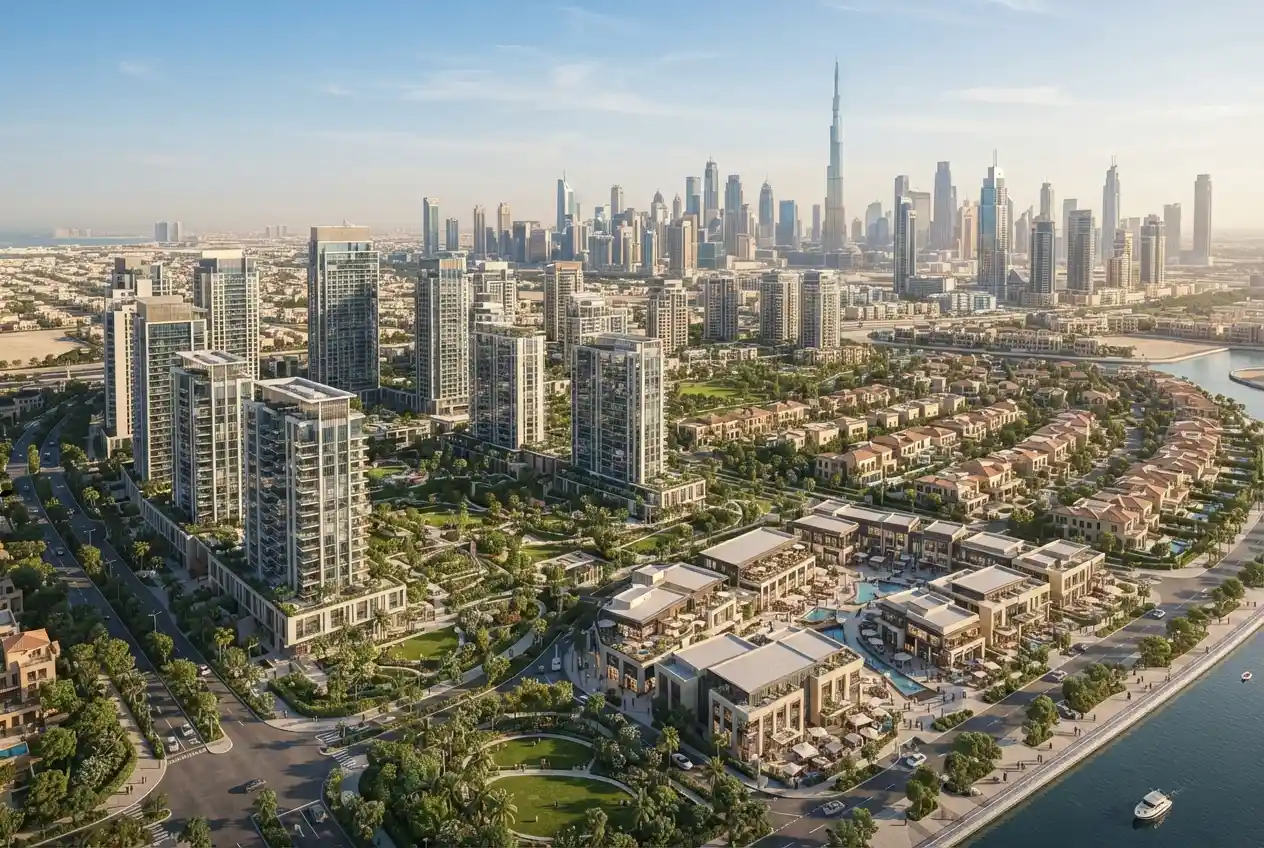
Dubai’s property market is shaped by a combination of major developers, investment groups, master developers and real estate companies that have helped transform the emirate’s urban landscape. Among the prominent names associated with large-scale development and investment is Dubai Holding. The group’s real estate interests span residential communities, hospitality, commercial destinations and other major urban projects.
For people searching for dubai holding real estate, it is important to understand that Dubai Holding is more than a conventional property brokerage. Its real estate activities are connected to development, investment, asset management and the creation of large-scale destinations that contribute to Dubai’s long-term economic and urban development.
What Is Dubai Holding Real Estate?
Dubai Holding is a diversified investment company with interests across several sectors, including real estate. Through its real estate businesses and assets, the group has been involved in major developments and destinations across Dubai.
Its property portfolio includes residential, commercial, hospitality and mixed-use assets. Rather than operating primarily as a traditional agency that connects individual buyers and sellers, Dubai Holding’s real estate role is more closely associated with development, ownership, investment and management of significant property assets.
This distinction matters for investors researching Dubai’s property market because a major real estate group can influence not only individual developments but also the wider communities and districts in which those projects are located.
Dubai Holding’s Role in Dubai’s Property Market
Large-scale real estate groups play an important role in shaping the physical structure of Dubai. Their projects can include residential neighbourhoods, hotels, commercial buildings, leisure destinations and integrated communities.
Dubai Holding’s real estate activities form part of this broader development ecosystem. The group’s portfolio and projects are connected with Dubai’s growth as an international business, tourism and residential destination.
For investors, understanding the developer or investment group behind a project can provide useful context when researching location, community infrastructure, amenities and the long-term positioning of a development.
Residential Real Estate and Communities
Residential property represents one of the most visible parts of Dubai’s real estate market. Demand comes from local residents, expatriate professionals, international buyers and investors looking for rental or long-term opportunities.
Large master-planned communities can offer a different proposition from individual buildings. They may include schools, retail facilities, parks, hospitality venues, recreational amenities and transportation connections within the wider development.
For buyers, this means the decision should not be based only on the apartment or villa itself. Community location, surrounding infrastructure, access to major roads and future development plans can also influence the property’s long-term appeal.
Hospitality and Mixed-Use Development
Dubai’s real estate market is closely connected to tourism and hospitality. Hotels, resorts, restaurants, entertainment venues and residential developments can operate within the same wider destination and contribute to its overall attractiveness.
Dubai Holding has significant interests in hospitality and destination development, which creates connections between property development and Dubai’s tourism economy. This integrated approach can help create destinations where residents, visitors and businesses interact within the same urban environment.
For property investors, proximity to established hospitality and leisure destinations can be one factor to consider when evaluating a location. However, investment decisions should always be based on current market evidence and property-specific financial analysis rather than location branding alone.
Dubai Investment Real Estate: What Investors Should Consider
Investors researching dubai investment real estate have a wide range of choices, from apartments and villas to commercial assets and larger investment opportunities. The presence of a major developer or investment group can be useful information, but it should not replace independent due diligence.
Investors should consider the property’s purchase price, expected rental income, service charges, financing costs, location, tenant demand and potential resale market. The investment horizon also matters because a property intended for short-term resale can have very different requirements from one intended to generate rental income over many years.
Location and Accessibility
Location remains one of the most important considerations in Dubai property investment. Access to major roads, business districts, airports, schools, retail destinations and leisure facilities can influence both residential demand and rental appeal.
Community Infrastructure
Master-planned developments can benefit from integrated infrastructure and amenities. Investors should evaluate what is already operational rather than relying entirely on future promises.
Rental Demand
Rental demand varies significantly between Dubai communities and property types. Investors should research current rents, occupancy trends and comparable properties before estimating potential returns.
Total Ownership Costs
The purchase price is only one part of the financial equation. Buyers should account for financing, service charges, maintenance, registration-related costs and other expenses when assessing an investment.
Dubai Holding Investment Real Estate and Long-Term Development
One reason major real estate groups attract attention is their ability to participate in projects over long development cycles. Large communities and destinations can take years to mature, with infrastructure and surrounding amenities developing progressively.
This long-term perspective can be important when evaluating property in emerging districts. Early-stage development may offer different opportunities and risks compared with established communities where prices, rental markets and amenities are already easier to assess.
Investors should therefore distinguish between a project’s current condition and its planned future. Development timelines can change, and projected growth should never be treated as guaranteed investment performance.
How Dubai Holding Real Estate Differs From Property Brokers
A property broker generally helps clients buy, sell or lease real estate. A major real estate investment group has a different role. It may develop projects, own assets, manage properties, invest capital and participate in destination planning.
This distinction is useful when comparing companies in Dubai’s real estate ecosystem. For example, someone researching professional advisory firms may also encounter Colliers real estate or other international property consultants.
These businesses can complement rather than directly replace one another. A developer may create and manage a project, while an independent adviser can provide valuation, market research, investment advice or transaction support.
Why Dubai’s Real Estate Market Attracts Investors
Dubai has developed a highly international property market supported by its position as a global business and tourism hub. Residential demand is influenced by population growth and international migration, while commercial and hospitality property is connected to business activity and tourism.
The emirate has also invested heavily in infrastructure and destination development. This combination has created a diverse property market where investors can choose between established districts and emerging communities.
However, market performance varies by location and asset type. Investors should avoid assuming that all Dubai properties will perform in the same way and should instead evaluate each opportunity individually.
What Buyers Should Research Before Purchasing
Anyone considering a property associated with a major developer or investment group should conduct normal property due diligence before committing funds.
- Research the specific development: Look beyond the parent company and understand the individual project’s location, facilities and current status.
- Compare market prices: Review similar properties in the same community before evaluating the asking price.
- Check ownership and transaction requirements: Make sure the purchase structure and registration process are clear.
- Calculate total costs: Include service charges, financing, maintenance and transaction expenses.
- Study rental demand: If the property is an investment, compare realistic rental income with comparable units.
- Consider the time horizon: Decide whether the property is intended for personal use, rental income or long-term capital growth.
Dubai Holding Real Estate and the Future of Dubai
Dubai’s development strategy continues to emphasise major destinations, residential communities, tourism infrastructure and business districts. Large investment and development groups are likely to remain important participants in this process.
For property buyers and investors, this creates a market with a wide variety of opportunities. It also makes careful research increasingly important. A well-known developer or investment group can provide useful background, but the individual property’s location, quality, pricing and market demand ultimately remain central to the investment decision.
Essential Points
Understanding dubai holding real estate requires looking beyond the conventional concept of a property agency. Dubai Holding’s real estate interests are associated with development, investment, hospitality, communities and major destinations that form part of Dubai’s wider urban landscape.
For investors exploring Dubai investment real estate, the group’s projects can be useful areas to research, particularly when evaluating established communities and large-scale destinations. Nevertheless, every property should be assessed on its own financial and market fundamentals.
Whether the goal is buying a home, generating rental income or building a property portfolio, informed decisions depend on location research, realistic financial calculations, current market data and proper due diligence. Dubai’s real estate market offers substantial variety, and understanding the organisations behind major developments is one useful part of that research process.