









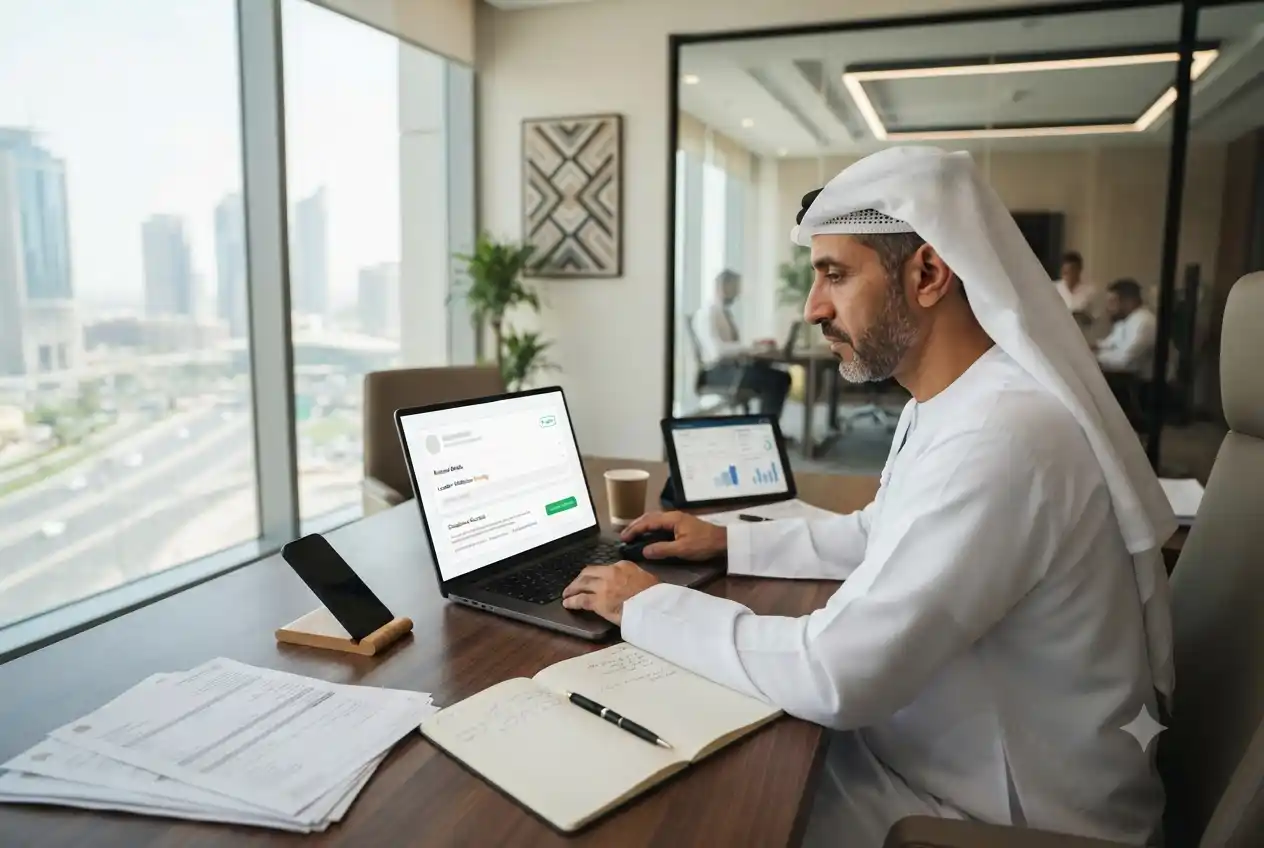
Trust plays a critical role in how customers choose businesses online. Before contacting a company, booking a service, or making a purchase, many consumers evaluate available information to determine whether a business appears legitimate and reliable. One of the most effective ways to establish credibility across digital platforms is through business verification.
Business verification helps confirm that an organization is genuine, authorized, and operating at its stated location. Verification processes are commonly used by search engines, online directories, map services, review platforms, and social networks to improve data accuracy and reduce fraudulent activity.
For businesses operating in competitive markets such as the UAE, verified profiles can contribute to stronger visibility, increased trust, and better customer engagement.
What Is Business Verification?
Business verification is the process of confirming that a company is legitimate and authorized to manage its online presence on a specific platform.
Verification typically involves validating important business details such as:
- Business name
- Physical address
- Phone number
- Website ownership
- Business registration information
- Authorized account access
Once verification is completed, businesses often gain access to additional profile management features and improved visibility opportunities.
Why Business Verification Matters
Online platforms aim to provide users with accurate and trustworthy information. Verification helps ensure that the businesses displayed in search results and directories are legitimate.
Verified businesses often benefit from:
- Greater customer trust
- Improved profile credibility
- Enhanced local search visibility
- Access to advanced platform features
- Protection against unauthorized edits
- Improved reputation management
For many organizations, verification serves as an important trust signal that can influence customer decisions.
Google Business Verification
One of the most widely recognized verification processes involves Google Business Profile. Google uses verification procedures to confirm that businesses are eligible to appear in local search results and map listings.
Google business verification helps organizations:
- Manage profile information
- Respond to customer reviews
- Publish updates
- Monitor profile performance
- Maintain listing accuracy
Verified profiles are generally more effective at attracting customer engagement and supporting local search visibility.
Businesses investing in business profile management often prioritize verification as an essential first step.
Business Verification and Customer Trust
Consumers are increasingly cautious when interacting with businesses online. Verified profiles help reassure customers that the information they see is accurate and officially managed by the business.
Trust signals provided by verification can influence:
- Customer inquiries
- Website visits
- Appointment bookings
- Product purchases
- Service requests
In competitive industries, even small credibility advantages can have meaningful impacts on customer acquisition.
How Verification Supports Local SEO
Local search engines rely on accurate business information to deliver relevant results to users.
Verification contributes to local SEO by helping platforms validate the authenticity of business profiles and listings.
Organizations implementing local business marketing strategies often use verification to strengthen local search signals and improve discoverability.
Verified businesses may have greater opportunities to appear in local search results, maps, and directory listings.
Business Profile Verification Across Platforms
While Google is one of the most prominent platforms, many other services also require verification.
Examples include:
- Online business directories
- Review platforms
- Maps services
- Industry-specific directories
- Social media networks
- Local listing platforms
Each platform may use different verification methods, but the objective remains the same: ensuring information accuracy and platform integrity.
The Connection Between Verification and Business Listings
Accurate listings and successful verification often work together to strengthen online visibility.
Businesses maintaining consistent business listings across multiple directories are generally better positioned to complete verification processes and maintain profile accuracy.
Consistency across platforms helps build trust with both customers and search engines.
Common Business Verification Methods
Verification methods vary depending on the platform and business type.
Common approaches include:
- Phone verification
- Email verification
- Postal mail verification
- Website verification
- Video verification
- Business document verification
Organizations should follow platform-specific requirements carefully to avoid delays or verification issues.
Challenges Businesses May Encounter
Although verification is usually straightforward, some businesses encounter challenges during the process.
Common issues include:
- Incorrect business information
- Duplicate listings
- Address inconsistencies
- Ownership disputes
- Missing documentation
- Verification code delivery problems
Maintaining accurate records can help businesses avoid many of these obstacles.
Verification and Reputation Management
Verified profiles often provide businesses with greater control over online reputation management.
After verification, organizations can typically:
- Respond to customer reviews
- Update profile information
- Add images and content
- Monitor customer interactions
- Track profile performance
These capabilities help businesses maintain accurate representations of their brands while improving customer engagement.
Technology’s Role in Verification Management
Organizations operating across multiple locations often manage dozens or even hundreds of online profiles.
Many companies use centralized platforms and broader business technology solutions to streamline verification workflows and maintain consistent profile information.
Technology can simplify administration while reducing the risk of data inconsistencies.
Measuring the Impact of Verification
While verification itself is only one component of digital visibility, it can contribute to measurable improvements in business performance.
Key metrics to monitor include:
- Profile views
- Search visibility
- Customer inquiries
- Website traffic
- Phone calls
- Review activity
- Direction requests
Organizations frequently use business intelligence services to evaluate customer engagement and identify opportunities for further optimization.
Best Practices for Business Verification
- Maintain accurate business information
- Verify profiles promptly
- Monitor profile ownership regularly
- Keep business records updated
- Remove duplicate listings
- Maintain consistency across platforms
- Respond to verification requests quickly
- Track profile performance metrics
Google provides detailed information through its business verification support documentation, which explains eligibility requirements and verification methods.
The Future of Business Verification
As digital platforms continue prioritizing trust, transparency, and information quality, verification processes are expected to become even more important.
Artificial intelligence, enhanced identity validation systems, and improved fraud prevention technologies will likely shape future verification requirements.
Businesses that proactively maintain verified and accurate profiles will be better positioned to build trust and compete effectively in digital environments.
Last Words
Business verification is an essential step for organizations seeking to improve credibility, strengthen local visibility, and build customer trust. Verified profiles provide greater control over business information while supporting marketing, reputation management, and customer engagement efforts.
By maintaining accurate information, completing verification processes, and monitoring profile performance, businesses can create stronger digital foundations that support long-term growth and online success.